
The Spike That Comes With Every Long Weekend
At 6:45 a.m. on the Friday before Hari Raya, a production supervisor in Klang counts the operators who have clocked in. The line needs eighteen. Twelve are in. Three are confirmed leave, two filed MC at 6:20 a.m., one has not answered the phone. The supervisor walks back to call HR. The morning before the long weekend has done what it does every year, on a calendar everyone could see.
The Malaysian Employers Federation has estimated absenteeism to cost local companies more than RM6 billion a year in lost productivity. For industries where coverage matters by the hour, manufacturing, retail, hospitality, logistics, that figure is felt directly in production output, lost sales, and missed dispatch windows. The spike is predictable. The response, in most companies, is not.
Why Factory and Retail Take the Heaviest Hit
Office work tolerates uneven attendance because the work follows the worker. Production lines and retail counters do not. A missing operator on an assembly shift slows or stops the line. A missing cashier during a public holiday sale lengthens the queue, the customer leaves, and the receipt total drops. A missing technician on a service rotation pushes every appointment that day into the next.
The cruel timing is that the pre-holiday surge happens exactly when these industries need more coverage, not less. Retail revenue peaks during festive shopping. Manufacturers run pre-shutdown ramp-ups to clear orders before the long break. Logistics handles parcel surges. Every one of these business realities collides with the same week when staff leave applications surge.
The Pattern Your Attendance Data Already Knows
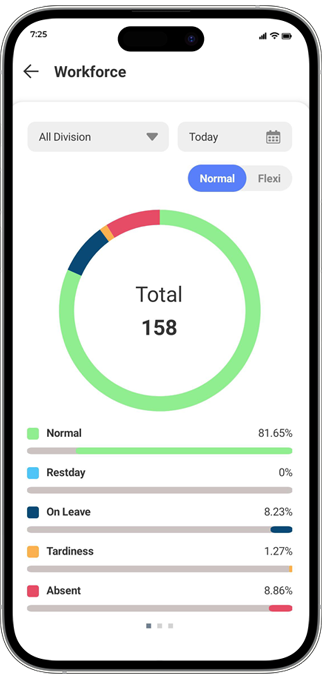
Pre-holiday absence is not a surprise. The same dates produce the same surge year after year. The data is already in the system from previous years. Yet most operations managers approach each long weekend as if it were a new situation, not the fourth or fifth iteration of a cycle that hits like clockwork.
TimeTec Attendance holds every clock-in and every absence by date, shift, location and employee. Comparing last year’s attendance during the same week against this year’s planned roster reveals the gap before it opens. The reports surface the absence pattern by long-weekend Friday, by Monday after public holiday, by pre-Hari Raya week, by year-end retail peak, without HR having to build the analysis from scratch.
The companies that read this data ahead of time plan coverage in advance. The companies that do not, find out when the morning shift comes up short.
From Pattern to Prevention: Crunch Time
Reading the data is half the answer. The other half is acting on it before the next surge arrives.
Once those high-risk dates are identified, TimeTec Leave‘s Crunch Time setting closes the loop. HR can mark the relevant periods inside the leave policy, and annual leave applications during those windows are restricted to prevent understaffing. Staff applying for leave on these dates see the policy upfront on their mobile application screen. The system holds the line, instead of HR having to refuse each individual request in the moment.
Paired with the shared Company Leave Calendar, where every employee and approver can see who is already on leave for any given date, the manager has both the rule and the visibility to keep coverage intact. Employees apply against a calendar where conflicts are already visible. Approvers act with the same view in front of them. Coverage stays planned, not improvised.
Before the Shift Comes Up Short
Reading the year’s history is the long-range view; the week-of view is what keeps the shift schedule from breaking on the day itself.
TimeTec Attendance’s timecard and multi-location views show who has clocked in, who is late, and which shifts are short. The view is available during the day, not only at month-end when the report runs. For a factory supervisor or retail manager handling the morning’s roster, the day-of visibility turns a 7 a.m. shortfall into a 5 a.m. signal, enough time to call in a standby, redistribute the line, or activate an offered overtime slot before the floor shows up short.
For multi-branch retail or multi-site manufacturing, the same view extends across every location. The branch that is short on a given morning shows up beside the branch that has surplus, which is the only way coordination actually happens at scale.
The Spike Is Predictable. The Coverage Should Be Too.
Long-weekend absenteeism is not a workforce surprise. It is a recurring rhythm documented in the company’s own attendance data, addressed only after it has caused the gap. Industries where shifts cannot be skipped pay for that gap directly: factory, manufacturing, retail, hospitality, logistics.

The factory floor that knew last year’s roster would come up short by four operators should not be the same one missing four operators this year. The retail counter that lost three hours of sales during last Hari Raya weekend should not be the same one losing three hours this year. The data was there. The settings that prevent the repeat take an afternoon to configure and protect every long weekend after.