
Most HR teams review the year’s data in December, when it is already too late to act on what they find. Leave forfeiture deadlines are days away, the OT cumulative for the year has been remitted, and the claim budget has either landed where it should or drifted past it. The mid-year HR audit is the check that prevents the December scramble, and June is exactly when to run it.
This is not a labour audit, and not the statutory submission check that lives at year-end. It is the operational read across every active HR module while there is still half a year to course-correct. Most companies skip it, not because it is difficult, but because nobody schedules it.
Why Mid-Year Is the Right Time
By June, six months of HR data have accumulated, enough to spot patterns that one month or one quarter would not show: the OT build-up, the leave under-use, the claim drift, the payroll variance against budget. It is also early enough to do something about what the data reveals.
For Malaysian companies whose leave year and statutory year both run with the calendar, June is the natural midpoint. For companies on a different fiscal cycle, the equivalent halfway mark serves the same purpose.
A December audit is a report card. A June audit is a steering wheel.
The Five Views That Make a Real Mid-Year Audit
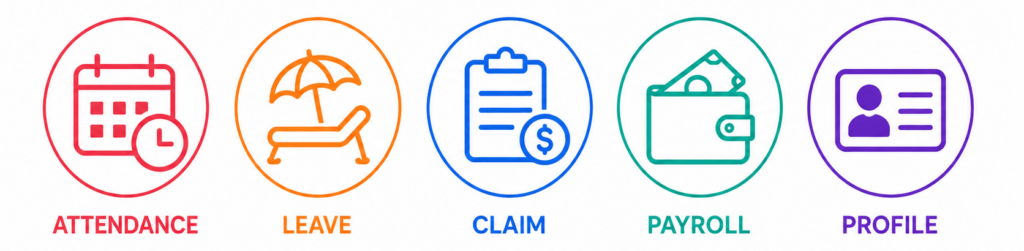
A real mid-year audit pulls from every active HR module: Attendance, Leave, Claim, Payroll, and Profile. Each one tells a different half of the workforce story, and the five together produce a picture no single module can.
Attendance: cumulative OT against the cap. Every employee earning RM4,000 or below is capped at 104 OT hours per month, and the same cumulative logic plays out across the year. We have written before about the 104-hour OT cap nobody is tracking, and mid-year is exactly when the data has accumulated enough to predict which employees will breach the cap in October or November. The fix is rarely dramatic: redistribute workload, reassign approvers for high-OT teams, or revisit shift patterns. But the fix is only possible if the cumulative view is being read in June, not when payroll runs the December report.
Leave: balances heading for burnout or forfeiture. Two patterns matter in June. Employees who have taken almost no leave by mid-year are signalling burnout or dependency, either of which becomes a problem in a labour dispute six months later. Employees stockpiling leave beyond the carry-over cap will lose days at year-end if nothing changes. Both need a conversation in July or August, not a forfeiture letter in December.
Claim: where spend has drifted. A halfway-year claim spend should be roughly half the budget. If a category is at seventy per cent of budget by June, something is drifting: a policy ambiguity, an approval pattern, a mileage rate that has not been revisited, or a quiet abuse nobody has flagged. If it is at twenty per cent, the spend was either over-budgeted or legitimate claims are being suppressed, both of which need explanation.
Payroll: variance that needs explaining. The first half of 2026 alone has carried multiple statutory changes affecting payroll cost: continued foreign worker EPF rollout, doubled EP salary thresholds from 1 June, and Lindung 24 Jam from the same date. Mid-year is when actual paid payroll can be reconciled against budget, including the statutory deltas, and the second half can be planned with a realistic baseline.
Profile: records that have quietly decayed. Mid-year is also when employee records drift. A marriage that was never updated in Profile means PCB is still being calculated wrong. A dependant added in conversation but not in the system means medical claim eligibility is unclear. A designation change that updated the title but not the reporting line means approvals are still going to the wrong person. None of these break loudly. They produce wrong answers when the moment comes.
Each of these patterns lives in a different module. Nobody is looking across all five at the same time, for the same workforce, on the same morning.
Why This Is an Afternoon in a Connected HRMS
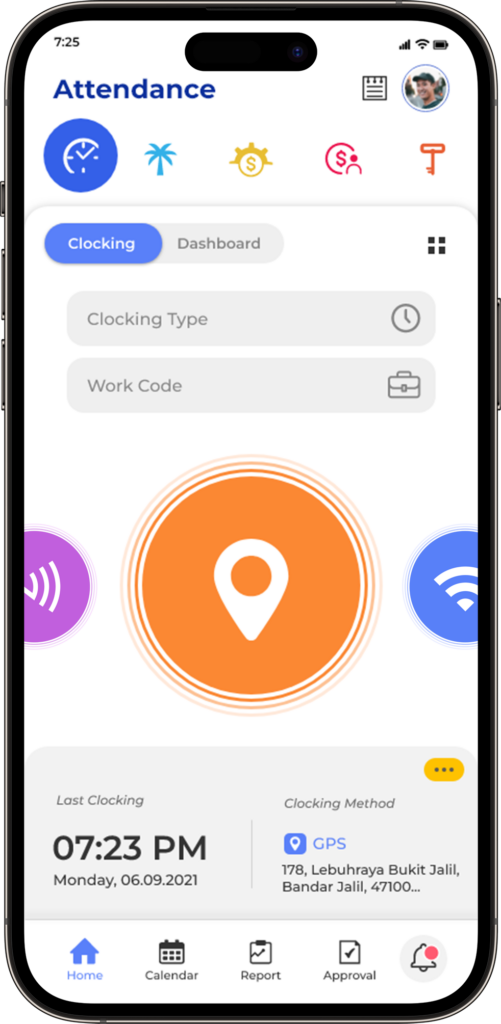
Running these five views in companies whose HR data lives in five different places, the biometric device, the payroll spreadsheet, the leave tracker, the claim folder, the HR file, is a week’s work. Running them in a connected HRMS is an afternoon.
TimeTec HR brings Attendance, Leave, Claim, Payroll, and Profile into a single platform, with cross-module reports that pull data without manual consolidation. The cumulative OT view exists. The leave balance and utilisation view exists. Claim spend by category and approver exists. Payroll variance by period exists. Profile completeness by employee exists. The reports are generated from the same underlying employee record, which means HR can pull an individual employee’s attendance trend, leave pattern, claim activity, and profile state without opening five separate systems.
The work is not in producing the views. It is in deciding what to do with them, and that part is HR’s job, not the system’s.
The Data Is Already There. The Question Is When You Read It.
A mid-year HR audit only works because the data is already there. Attendance is recording every shift, leave is recording every approval, claim is recording every reimbursement, payroll is recording every cycle, profile is recording every change. The question is not whether the data exists. It is whether HR is reading it in time to act on what it shows.
December reviews change nothing about the year that just passed. June reviews change the year that is still happening. The difference between the two is not the data. It is the calendar.