
An Offer That Sounds Too Good
Imagine a scheme where the government hands you up to RM200 a month for every entry-level employee, and up to RM300 for those above them, simply for paying your people more. No repayment, no loan, cash into the business each month. For a small employer squeezed between rising wage expectations and thin margins, it sounds close to free money.
It is a real programme, and thousands of employers have signed up. The reason to read the fine print is not that the offer is a trick. It is that the offer is temporary and the commitment behind it is not.
What the Progressive Wage Policy Actually Offers

The Progressive Wage Policy is a voluntary scheme under the Madani Economy framework, aimed at micro, small, and medium enterprises and covering full-time employees earning under RM5,000 a month. Participating employers receive a monthly cash incentive, up to RM200 per entry-level worker and up to RM300 for those in higher roles, provided those employees actually receive wage increases in line with the policy’s salary guidelines.
The uptake is not trivial. By mid-2026 the government had disbursed more than RM64 million to over 4,000 employers, benefiting more than 51,000 workers. The intent is defensible: help employers absorb the cost of raising wages, while tying those raises to structured progression and training that lifts skills alongside pay.
The Catch Is the Commitment, Not the Cash
Here is what the headline number obscures. The incentive is a subsidy on the increase, paid month to month. The wage increase itself is a permanent addition to your cost base.
When the incentive period ends or the terms change, the raises do not roll back. You have moved your people up a structured salary ladder, and you carry that higher payroll on your own from then on. That is not a reason to avoid the scheme, fairer wages and a more skilled workforce are worth paying for, but it is a reason to enter it as a deliberate compensation decision rather than a grab at monthly cash. The subsidy is the easy part. The wage structure you commit to is the part that stays.
Free Money Still Has to Be Proven
There is also a compliance dimension employers underestimate. The incentive is contingent, not automatic. To keep qualifying, you have to demonstrate that the wage increases actually happened, in line with the guidelines, and that the training requirement, a minimum of 21 hours a year per employee, has been met.
That means the scheme is only as workable as your ability to evidence it. Ad hoc raises recorded in a spreadsheet, with salary figures scattered across versions, are exactly the setup that turns a straightforward claim into a documentation scramble.
Where the Structure Has to Live
A progressive wage commitment is, at its core, a payroll structure that has to hold over time and prove itself on demand. TimeTec Payroll processes each employee’s salary and its components and issues an itemised payslip every cycle, so the record of what someone was paid, and when it went up, sits in a dated payslip trail rather than a patchwork of spreadsheet versions. As the argument in Your Allowance Does Not Count Toward Minimum Wage showed, how a wage is structured, not just its total, is what decides whether it satisfies the rules, and the same discipline applies here. A raise you cannot cleanly evidence is a raise the scheme may not credit you for.
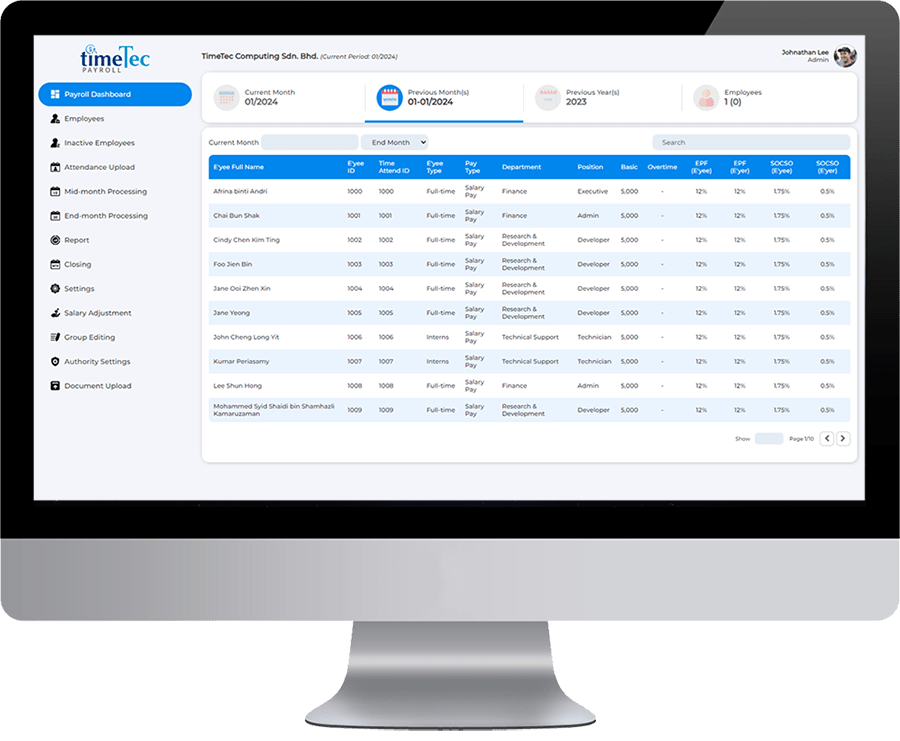
Handled well, the policy does what it promises and shares the cost of paying people better. Handled loosely, it becomes an obligation you took on for a subsidy you struggled to claim.
The Subsidy Is Temporary. The Wage Floor Is Forever.
The Progressive Wage Policy is a good deal for employers who go in clear-eyed, and an expensive surprise for those who chase the monthly cheque without pricing the commitment behind it.
Take the money. Just be sure you meant to make the promise that comes with it.