
The question most JMB committees prepare for before the AGM is “what did we spend?” The accounts are audited. The maintenance fee collection figures are pulled from property accounting system. The budget variance is explained line by line.
The question they are rarely prepared for is the one that comes from the floor: “collection has been below 80% for two years — what is the actual plan?” Or: “the gym is always full — why hasn’t the booking cap been reviewed?” When those questions arrive, most committees answer from memory. Not from data they reviewed that morning.
What JMB AGM Preparation Usually Misses
JMB AGM preparation typically means financial preparation. The accounts are audited, the budget is tabled, and the committee walks in ready to defend the numbers. That is necessary — but it is not the same as walking in with a clear picture of how the development is actually functioning.
Collection rates, occupancy breakdown, facility demand, visitor patterns — this data already exists in the system the management office uses daily. It is not missing. It is simply not being reviewed as a set before the committee stands in front of residents.
Governance decisions made without this picture are reactive by default. Problems surface at the AGM because no one surfaced them earlier.
The Questions Your Data Already Answers
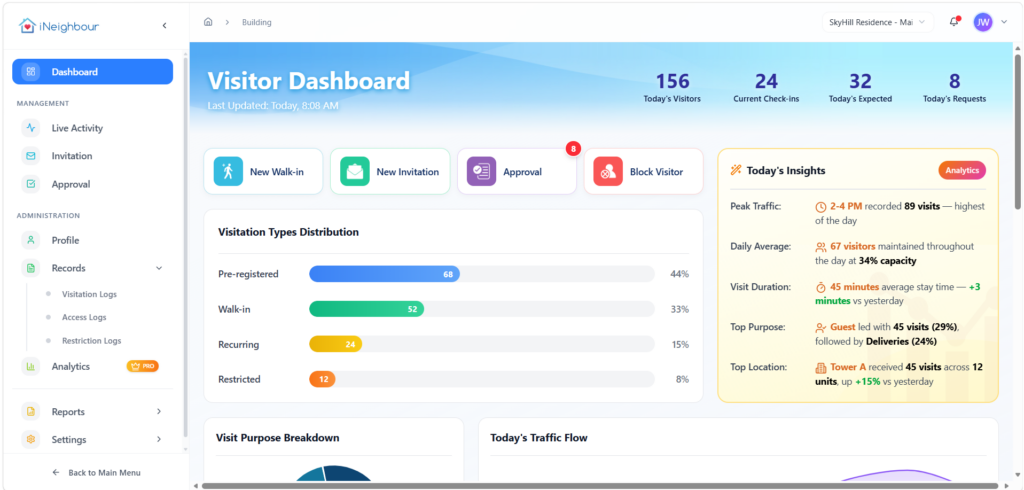
Visitor volume trends — Peak periods, high-traffic days, and which blocks generate the most visitor activity. A development that sees the majority of visitor volume concentrated on weekends makes different guardhouse staffing decisions than one with flat daily traffic. These are decisions most committees currently make by instinct.
Maintenance fee collection trend — Not just who owes today, but how collection has moved over six to twelve months. A committee that reports “collection improved from 68% to 79% over the past two quarters” is making a governance statement. A committee that reports only the current outstanding balance is reporting a snapshot. The trend is what tells residents whether the committee’s approach is producing results.
Occupancy breakdown — How many units are owner-occupied, tenanted, or vacant, and whether that split is shifting. This affects everything from visitor volume to fee recovery risk. A development with a rising proportion of tenanted units has different community dynamics than one that is predominantly owner-occupied. The committee making policy for both needs to know which one they are actually managing.
Facility booking utilization — Which facilities are oversubscribed and which go unused. When a resident asks why the gym booking cap has not been reviewed, a committee with utilization data answers the question and moves on. Without it, the conversation becomes a debate about whether the problem is real. As we explored in Facility Booking Disputes Are the JMB’s Most Preventable Complaint, booking records are the foundation for enforcing rules fairly — and the same data that prevents disputes is what justifies policy changes at AGM.
Why the AGM Is the Right Moment to Surface This
An AGM is the one occasion each year when the committee reports to the people it governs. Residents arrive with observations, complaints, and opinions formed from their own daily experience of the development. When the committee’s picture of the development is sharper than what residents see from the ground floor, the conversation is grounded. When it is not, every question becomes a challenge.
This is not about presenting impressive data. It is about the committee’s ability to hold its position when challenged. “Gym utilization averaged 94% over the past six months — the current cap was set when the facility had 40% fewer registered users” ends a debate. “We have received feedback that the gym is always busy” does not.
The Data Is Already There
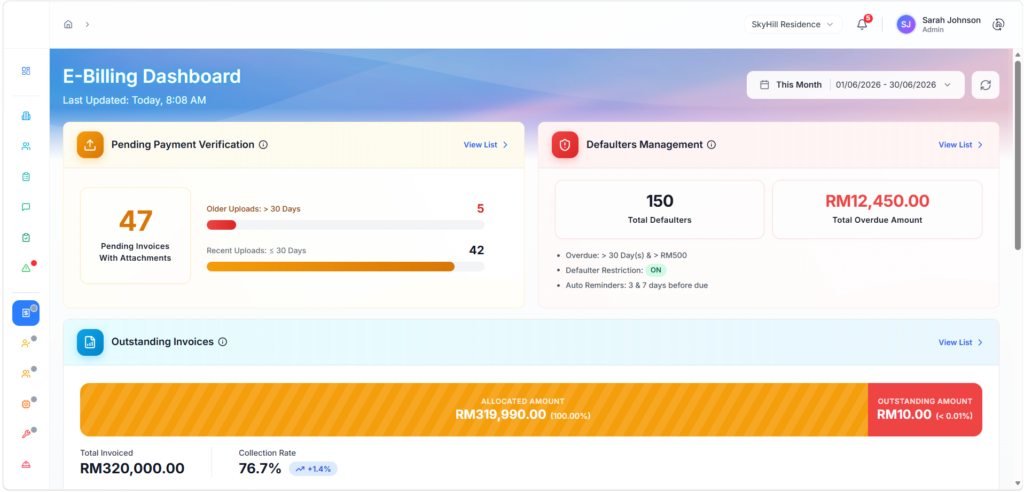
iNeighbour pulls collection performance, occupancy breakdown, facility utilization, and visitor trends from the same system the management office uses every day. No separate report to commission. No figures to consolidate the night before the meeting.
The committee that reviews this data before the AGM does not walk in better prepared because they worked harder. They walk in better prepared because they looked at what was already there.
Residents do not lose confidence in a committee because the development has problems. They lose it in a committee that does not appear to know what those problems are