Why Strata Facility Booking Disputes Keep Landing on the Committee Table
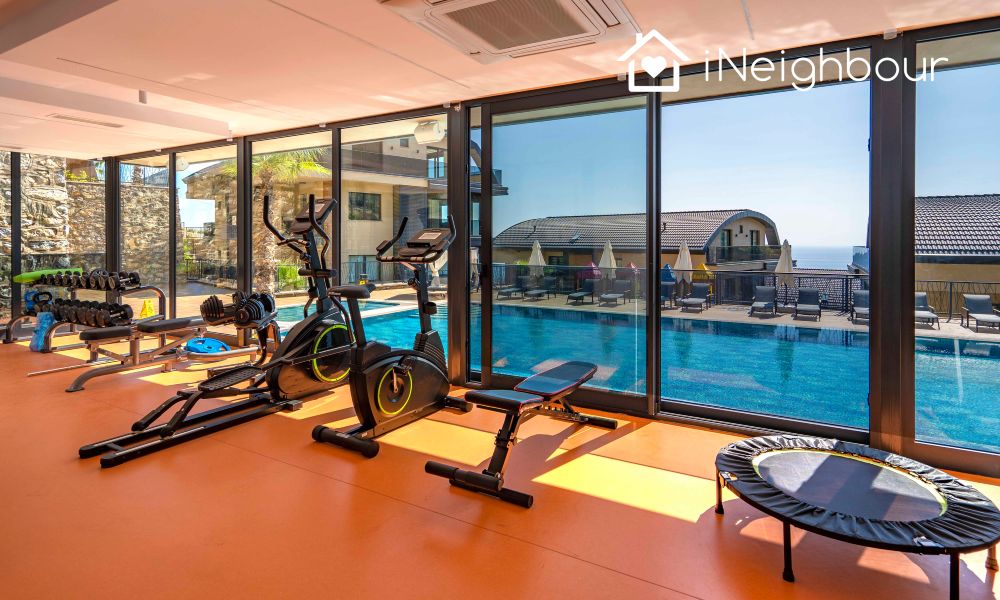
Walk into any committee meeting in a Malaysian condominium and the same item reappears on the agenda. Someone booked the BBQ pit for Saturday but another family was already there. The function hall deposit was never returned because nobody could agree who damaged the sofa. The same three units seem to take every weekend badminton slot. Strata facility booking disputes are the most common, most recurring, and most preventable category of complaint the committee handles.
The frustrating part for committees is not the disputes themselves. It is that the committee becomes the arbiter by default, and without records, every ruling feels arbitrary to the losing party.
Why Facility Bookings Become Problems
Facility complaints rarely reach the committee table as booking-system problems. They arrive dressed as fairness accusations, damage arguments, and favoritism claims. The committee is then asked to make a ruling on information it does not fully have.
Every complaint follows the same structural pattern. Complaint arrives. No record exists. Committee makes a judgment call. The losing party suspects bias. Over time, trust in the committee erodes over matters that have nothing to do with governance quality and everything to do with the absence of evidence.
That cycle is the real cost of manual facility booking. It is not wasted admin time. It is the slow loss of committee credibility.
The Four Disputes Every Strata Community Eventually Faces
Four disputes repeat across almost every residential development:

- The double-booking. Two residents arrive at the same slot, each holding a different version of the booking.
- The hoarding accusation. The same family appears to block every Saturday BBQ slot or every Sunday badminton hour, and other residents notice.
- The unauthorized access. Someone uses the facility who never booked it, and the actual booker either finds it occupied or walks away frustrated.
- The damage dispute. A chair is broken, BBQ grill is missing, but no record reliably identifies who was in the hall that evening.
Each of these is solvable, but only if the booking process generates evidence that holds up when a resident challenges it.
Why Manual Booking Logs Fail Even When They Exist
Most developments already have something in place. A guardhouse notebook. A WhatsApp group administered by a committee member. A shared spreadsheet. None of these generate an audit trail that survives a real dispute.
Notebooks have no timestamps residents cannot overwrite. WhatsApp messages can be deleted. Spreadsheets have no identity verification. Key-based access leaves no log of who opened the door or when. When a complaint arrives, the committee is left relying on memory, goodwill, and social pressure.
A record of intent is not a record of enforcement. The two are not interchangeable.
What Digital Facility Booking Actually Enforces
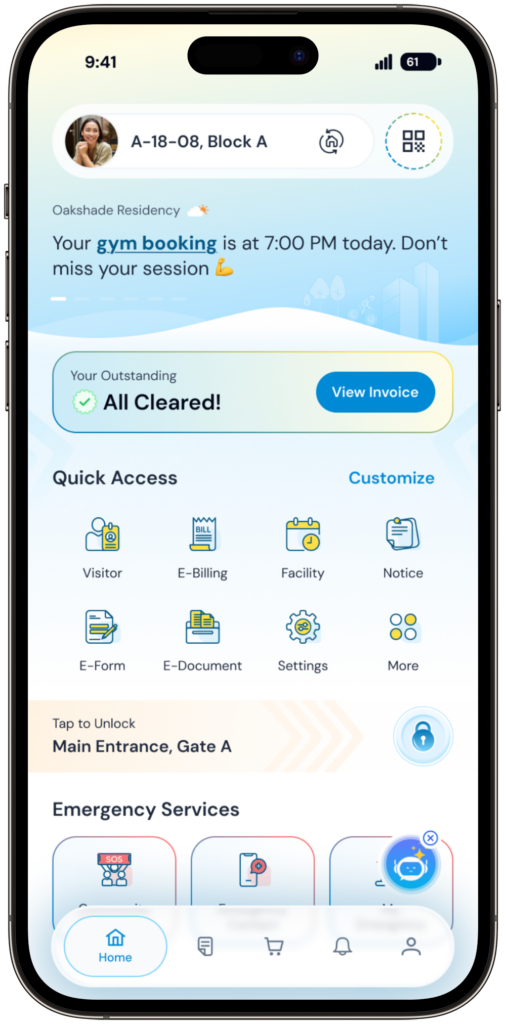
This is where iNeighbour changes the underlying operation. Facility booking inside the platform is not a calendar with nicer UI. It is an enforcement layer that produces the evidence the committee has been missing.
Per-unit booking caps prevent hoarding without anyone having to play enforcer. Administrators configure daily or weekly maximums per unit, and the system refuses bookings that exceed the limit. The hoarding accusation disappears because the rule is applied uniformly, automatically, and visibly.
Deposit holds run through E-Billing. When a resident books the function hall, the deposit is captured through the same multi-payment gateway that handles maintenance fees. Refund decisions after the event are recorded against that booking, posted to i-Account, and defensible if challenged later.
Access control is tied to the booking window. The badminton door, BBQ pit gate, or function hall entry unlocks only during the booked time slot. Unauthorized access stops being a dispute category because the door will not open for someone who did not book.
Defaulter-flag integration blocks facility bookings for residents in arrears. This is the same enforcement principle we have written about in How JMBs and MCs Can Use i-Neighbour to Handle Defaulters Effectively Without Overdoing It. Payment discipline becomes operational, not confrontational.
Approval workflow supports the facilities that need human judgment. Function halls, multipurpose rooms, and high-value spaces can be configured to require management approval before the booking is confirmed. Committee members stop mediating after the fact and start gatekeeping before the booking locks in.
Platform-wide activity logs generate the timestamped audit trail every dispute eventually needs. When a resident challenges a ruling three weeks later, the committee has the record.
From Dispute Handling to Dispute Prevention
The shift is not that facility disputes vanish. Some always occur. The shift is that the committee stops being the arbiter.
Rules live in the system. Enforcement is automatic. Records are timestamped. Evidence is preserved. When a dispute does reach the committee, the conversation starts with the audit trail, not with competing memories.
The committee’s role changes from resolving disputes to reviewing them. That is the difference between governance that feels fair and governance that feels arbitrary, and residents feel the difference long before they can articulate it.
Closing
A logbook records who booked the facility. It cannot tell you who should not have.
If your development is resolving the same facility booking disputes every month, the gap between your current process and what is achievable is worth a conversation. Request a demo of iNeighbour to see how facility booking, deposits, access control, and defaulter management operate as one system.
FAQ
- Can the system prevent the same resident from monopolizing peak weekend slots? Yes. Administrators configure daily or weekly booking maximums per unit, and the system automatically rejects bookings that exceed the cap. Hoarding stops being a committee decision and becomes a system rule.
- Can facility access be restricted to only the booked time window? Yes. Access control is linked to the booking window, so facility doors unlock only during the booked slot. Residents cannot use a facility outside the time they booked, and non-booked access is structurally prevented.
- How does the system handle booking attempts from residents flagged as defaulters? Residents in arrears are blocked from confirming new facility bookings until the outstanding balance is cleared. The defaulter flag applies the same principle across access, parking, and facility use.