
The Disruption Was Never the Surprise
Every year, Malaysia runs the same schedule. The monsoon floods the east coast and the low-lying towns. The dry season brings the haze, and the API climbs past the point where schools are told to close. And not so often an outbreak, a pandemic at the extreme, empties offices and shuts districts.
None of this is unforeseeable. It is seasonal, recurring, and on the record. Yet most companies meet each one the same way: as a shock, improvised at eight in the morning when half the workforce cannot get in or should not be out. The disruption is predictable. The scramble that follows is the part that keeps repeating.
Every Time, the Same Reflex

Watch how a typical company handles a flood morning or a hazardous-air day, and the response is almost always one of two extremes. Either everyone is marked absent and the day is docked, punishing people for weather and air they did not choose. Or everyone is told to come in regardless, driving through floodwater or unsafe air to satisfy a habit of physical presence.
Both are decisions made in a panic, and both are avoidable. They happen because the company never decided, in advance, what a disruption day actually means for its people, so it defaults to whatever feels firm in the moment. Firm is not the same as fair, and it is rarely the same as smart.
Predictable Means You Can Prepare
The whole argument turns on one fact: these events are not random. A flood in the monsoon, haze in the dry months, a spike in an outbreak, none of them arrive without warning, and none of them are new. A company that is caught off guard by the monsoon has chosen not to look at a calendar.
There is also a duty in the background that does not pause for weather. The Occupational Safety and Health Act asks every employer to keep the working environment safe so far as is practicable, and DOSH spells out real action points as the haze API rises. Sending staff out into conditions the authorities have flagged as unsafe, when the work could be done elsewhere, is not a neutral act. Preparing for the predictable is not generosity. It is part of the job.
What a Standing Plan Looks Like
The fix is unglamorous and effective: decide the rules before the disruption, not during it. Which roles can work remotely and which genuinely cannot. What happens to attendance and pay for each group. What conditions trigger the switch, a flood warning, an API threshold, a health directive, so nobody has to argue it in the moment.

Done once, that plan turns every future disruption from a crisis into a procedure. The staff who can work from home do, and are recorded as working. The staff who genuinely cannot are handled consistently and humanely, rather than case by case at the mercy of whoever is deciding that morning. The company stops improvising and starts responding.
The System That Makes It a Switch, Not a Scramble
A plan only works if the mechanics behind it work, and the mechanics used to be the sticking point. Letting people work through a disruption meant losing track of who was actually working. That is no longer true.
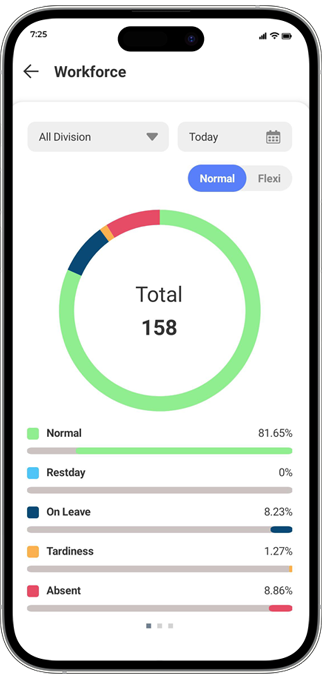
TimeTec Attendance lets an employee clock in through the mobile app and be recorded as working from wherever they are, so a disruption-day arrangement becomes a tracked, accountable workday rather than a lapse in oversight. From the employer’s side, the same system is where you set it up in advance: build the schedules and shift rosters, assign who works remotely and who stays on site, and move people onto a special or emergency arrangement when the trigger hits, all from one place. When attendance no longer depends on a turnstile, switching the company to a disruption footing is a decision you make, not a system you fight. The plan becomes a setting, not a scramble.
The Weather Is Predictable. Being Unprepared Is a Choice
The flood will come. The haze will come. Something will empty the office again. The only variable an employer actually controls is whether the response was decided in advance or invented under pressure.
The companies that come through these seasons with their workforce intact are not the ones that were toughest about attendance. They are the ones that treated the entirely predictable as exactly that.