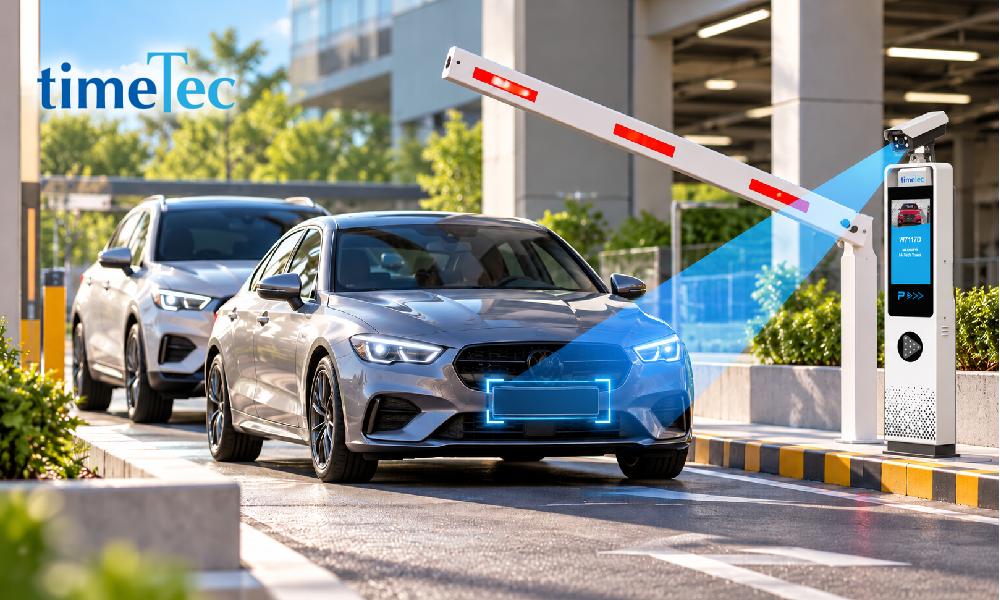
License Plate Recognition (LPR) makes parking more convenient. Drivers can enter without collecting a ticket and, with an integrated automatic payment service, leave without stopping to make a manual payment.
However, one familiar problem remains: tailgating, where a second vehicle follows closely behind an authorized vehicle through an open barrier without obtaining its own authorization.
At an entrance, this can result in unauthorized access or an incomplete parking record. At an exit, it can allow a motorist to leave without paying. Both situations undermine parking control and create additional work for operators.
Addressing the problem requires more than accurate plate recognition. It requires the camera, vehicle sensors, barrier controller and parking management system to work together.
Why LPR Alone Cannot Prevent Tailgating
An LPR camera identifies a vehicle by reading its number plate. A barrier controls its passage. These are related but separate functions.
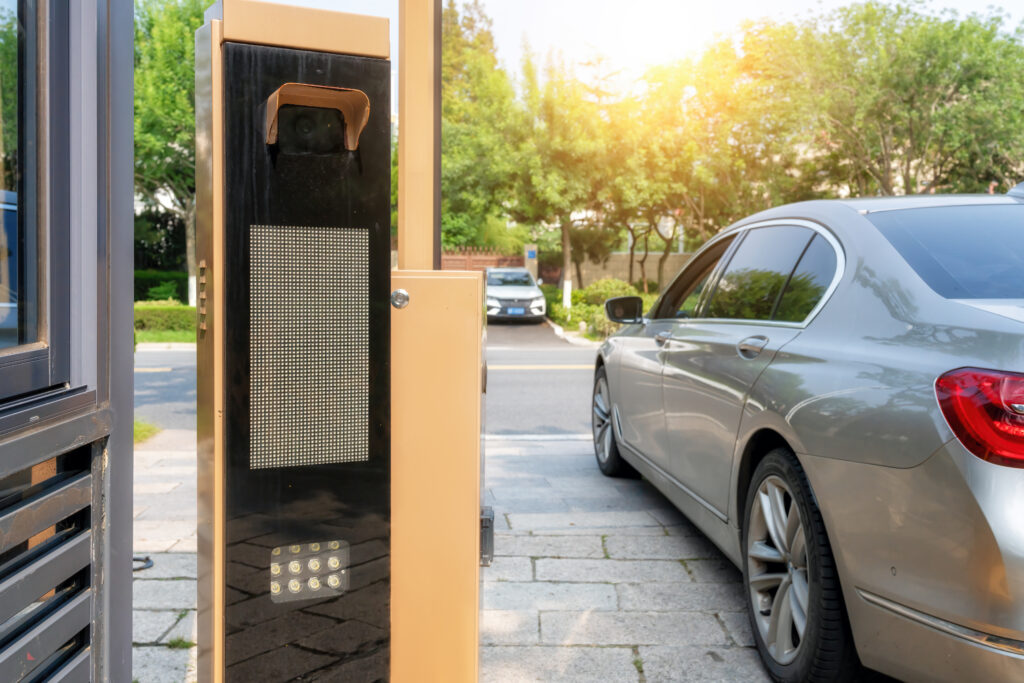
Even if the camera correctly reads both vehicles’ plates, the second vehicle may still pass while the barrier remains open for the first. Conversely, when vehicles follow extremely closely, the first vehicle may obscure the second vehicle’s plate.
Reading a plate also does not prove that the vehicle crossed the barrier. A vehicle may approach, stop, reverse or move into an adjacent lane. Reliable passage records therefore require information beyond plate recognition.
The underlying challenge is to establish whether every vehicle that physically crosses the control point has its own valid authorization.
The Safety Dilemma of a Single Barrier
A parking barrier must allow an authorized vehicle through while protecting vehicles and people within its operating area.
When a second vehicle follows closely, it may occupy the safety detection zone before the barrier can close. The safety system may then keep the arm raised or reverse its closing movement.
This creates a practical limitation: a conventional single barrier cannot guarantee that it will stop a determined bumper-to-bumper follower while maintaining its safety protection.
Simply making the barrier close faster does not resolve this limitation. Closing speed must suit the equipment, lane arrangement and safety system. Disabling safety detection to catch a tailgater creates an unacceptable risk of impact.
The objective for most commercial parking sites should therefore be to reduce opportunities, detect unauthorized passages and support effective follow-up.
Start with the Lane and Barrier Settings
Before purchasing additional equipment, operators should review how the existing lane functions.
Unnecessary closing delays, unsuitable sensor positions or poorly configured opening commands may leave the barrier open longer than required. A wide or poorly channeled lane may also allow vehicles to move around the intended detection area.
A practical review should cover:
- Barrier closing logic: Close promptly after the authorized vehicle clears the protected area.
- Sensor placement: Position detection zones to support reliable approach, presence and passage detection.
- LPR capture area: Align the camera’s reading zone with the correct lane and vehicle approach.
- Opening commands: Check how repeated reads and successive authorizations affect the barrier cycle.
- Lane layout: Use appropriate islands, markings and channelization to guide vehicles through the controlled passage.
The intended operating policy matters. A site requiring the barrier to close between every vehicle needs different control logic from one allowing continuous passage for a sequence of individually authorized vehicles. In either case, every physical passage should be accounted for.
Detect Vehicles Independently of Their Plates
A stronger arrangement combines LPR with independent vehicle detection.
Depending on the lane, this may involve induction loops, laser scanners or suitable vehicle-tracking technology. The purpose is to establish how many vehicles crossed, in which direction, and whether each passage matched an authorization.
For example, if the system records two vehicles crossing but only one approved passage, it can generate a suspected tailgating event.
However, a safety presence sensor is not automatically a reliable vehicle counter. Two closely following vehicles may produce continuous occupancy of a detection zone. Equipment should therefore be assessed specifically for its ability to distinguish separate vehicles under the conditions found at the site.
Motorcycles, long vehicles, reversing movements and stop-start queues should be included in testing.
Connect Detection to the Parking Management System
Detection becomes useful when it produces an actionable record.

A suspected tailgating event should bring together the available evidence: vehicle images, recognized plates, crossing time, lane, barrier status and the corresponding entry, payment or access authorization. A short video clip can help an operator understand what happened.
The system should distinguish confirmed information from uncertain associations. If the second vehicle’s plate is obscured or unclear, the event should remain subject to review rather than automatically assigning it to a motorist.
Entry and exit incidents also require different handling.
| Location | Main concern | Appropriate response |
| Entrance | Unauthorized access or missing entry record | Preserve evidence, alert the operator and verify the vehicle’s entry |
| Exit | Departure without a valid paid or authorized exit | Preserve evidence and investigate possible revenue loss |
| Restricted or nested area | Access beyond the vehicle’s permitted zone | Alert security or the operator and verify access entitlement |
This approach helps operators resolve discrepancies without treating every missing record as deliberate abuse.
Use Warnings to Discourage Opportunistic Behavior
Clear signs, LED messages and audible announcements can reinforce the rule that each vehicle requires its own authorization.
A simple message such as “One vehicle per authorization. Keep your distance” sets a clear expectation.
Where an operator or command centre is available, a suspected incident can trigger a live alert. The operator can review the footage and use an intercom or public-address system where appropriate.
Warnings are useful deterrents, but they should support detection and operating procedures. They cannot physically prevent a determined driver from following another vehicle.
When Two Interlocked Barriers Are Justified
For sites where unauthorized entry carries a significant security consequence, two interlocked barriers can provide stronger control.
The vehicle enters a holding area through the first barrier. That barrier closes, and the system verifies the vehicle’s authorization and occupancy of the holding area before opening the second barrier.
The occupancy check is essential. Installing two barriers in sequence is insufficient if the system cannot recognize that two vehicles have entered the space together.
This arrangement requires adequate lane length, appropriate safety detection, emergency operating provisions and a procedure for handling exceptions. It also increases passage time and may create queues.
It is therefore more suitable for selected restricted-access locations than for every busy public car park.
Choose the Solution According to the Actual Risk
For a commercial parking site, the main concern may be unpaid exits. For a residential development, it may be unregistered visitors. For a restricted facility, it may be unauthorized access to a sensitive area.
These risks do not necessarily justify the same investment.
Most commercial sites should begin with properly configured barriers, suitable passage detection, evidence capture and a clear response process. Higher-security sites may justify a controlled holding area with interlocked barriers.
Before wider deployment, operators should pilot the proposed solution on a problematic lane and measure:
- Missed tailgating incidents.
- False alarms.
- Quality of vehicle and plate evidence.
- Queue length and passage time.
- Operator workload.
- Performance with different vehicle types and close-following gaps.
Effective tailgating control depends on accounting for every vehicle that crosses the barrier. Accurate LPR provides identity; vehicle detection establishes passage; control software connects the two. Bringing these functions together offers a practical way to protect parking revenue and strengthen access control while preserving safe operation.
03-8070 9933 | Email | www.timeteccloud.com | Interest Form