
The Number That Should Keep Every HR Manager Awake
The Monroe Consulting Malaysia Talent Report 2026 found that 93% of Malaysian employees are exploring or open to better job opportunities this year. Not dissatisfied employees. Not underperformers. Ninety-three percent of the workforce.
Most HR teams respond to this number by running engagement surveys, organizing team-building events, or revisiting their benefits packages. These are reasonable actions. They are also slow, retrospective, and disconnected from the data the company already has.
Because the signals that an employee is about to leave do not start with a resignation letter. They start months earlier, inside the HR system that nobody is reading for this purpose.
The Signals Are Already in the System
An employee who is disengaging does not announce it. Their behaviour changes gradually, across multiple modules, in patterns that are individually unremarkable but collectively unmistakable.
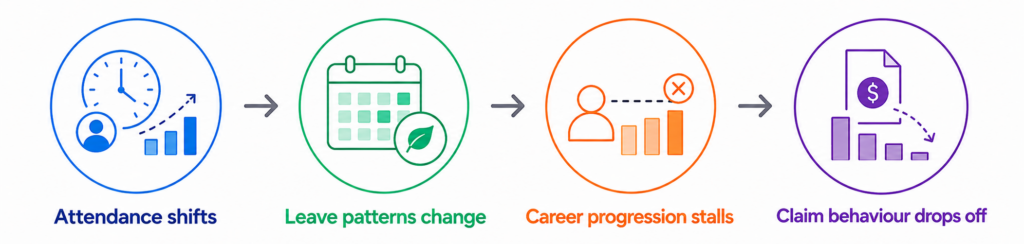
Attendance shifts. Clock-in times drift later by five, then ten, then fifteen minutes over several weeks. The employee who used to arrive early now arrives at the last acceptable minute. They clock out at exactly the end of shift, never a minute more. Voluntary overtime, which they used to accept regularly, stops entirely. None of these are policy violations. None of them trigger an alert. But the pattern is visible to anyone who looks at the attendance data over a three-month window instead of a single day.
Leave patterns change. Half-day leave requests increase, particularly on Mondays and Fridays. Medical leave clusters in short bursts rather than genuine illness patterns. Annual leave is taken in scattered single days rather than planned blocks, which often signals interview activity. The leave module captures every one of these applications. Nobody reads the pattern.
Career progression stalls. The employee’s Profile shows no salary adjustment in 18 months. No designation change. No department movement. No training record. The Career Progression module has been silent since their last confirmation or promotion. This is not a signal the employee sends. It is a signal the company sends to the employee: nothing is changing for you here.
Claim behaviour drops off. An employee who used to submit travel claims, training claims, and mileage claims regularly stops submitting them. This is not a policy issue. It is a participation issue. An employee who has mentally checked out stops investing effort in activities that only benefit them if they stay. The Claim module sees the drop. Nobody connects it to retention.
Each of these signals lives in a different module. Attendance. Leave. Profile. Claim. Each module owner sees their own data in isolation. Nobody is looking across all four at the same time for the same employee.
Why Engagement Surveys Miss What the HRMS Catches
The standard response to the 93% headline is to run an engagement survey. Ask employees how they feel. Measure satisfaction on a scale of 1 to 5. Identify the departments with the lowest scores. Develop action plans.

Surveys have a fundamental limitation: they capture what employees are willing to say, not what they are actually doing. An employee who has already decided to leave will often score the survey neutrally to avoid drawing attention. An employee who is actively interviewing will not flag it in a feedback form. The survey measures stated sentiment. The HRMS measures actual behaviour.
Behaviour is harder to fake. An employee can write “satisfied” on a survey while their attendance data shows a steady drift toward disengagement. They can say “I feel valued” while their Career Progression has been static for two years. The HRMS does not ask for opinions. It records actions. And the actions tell a more reliable story than the answers.
This does not mean surveys are useless. It means surveys and HR system data should be read together, not separately. The survey tells you how people feel. The HRMS tells you what they are doing. When both point in the same direction, the signal is strong. When the survey says “fine” but the HRMS says “drifting,” the HRMS is usually right.
What Cross-Module Visibility Actually Looks Like
The challenge is not that the data does not exist. It is that most companies never look at it this way.
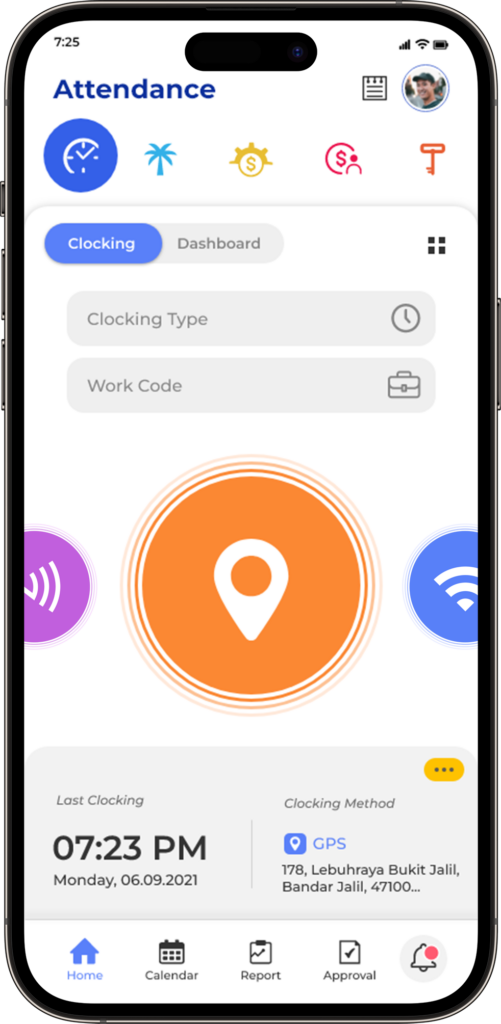
A TimeTec HR suite with Attendance, Leave, Claim, Payroll, and Profile connected through a single employee record already captures every signal described above. The attendance module records clock-in drift and OT patterns. The leave module records application frequency and type distribution. The claim module records submission activity. The Profile module records career progression events, or the absence of them.
The data is already there. It sits in over 50 reporting options across the modules. The reports are generated from the same underlying employee record, which means an HR manager can pull an individual employee’s attendance trend, leave pattern, claim activity, and career history without opening five separate systems.
The difference between a company that sees the resignation coming and one that does not is not a better tool. It is the habit of reading the data they already have across modules instead of within them.
The Retention Conversation That Happens Too Late
In most companies, the retention conversation starts when the resignation letter arrives. HR schedules an exit interview. The manager asks what went wrong. The employee gives polite, non-committal answers because they have already made their decision. The company offers a counteroffer. The Monroe report notes that while 54% of Malaysian employers believe counteroffers work, employees largely view them as a temporary fix rather than a genuine solution.
By the time the letter is on the table, the window for intervention has closed. The employee checked out months ago. The attendance data showed it. The leave pattern confirmed it. The Career Progression silence explained it. The data was there. Nobody read it.
The companies that retain talent in a market where 93% are open to leaving are not the ones with better counteroffers. They are the ones that noticed the drift early enough to have a different conversation: what would make you want to stay, asked before the employee started looking, not after they found something better.
The Data Is There. The Question Is Whether Anyone Looks.
The 93% number is not a crisis that can be solved with a single initiative. It is the new normal of a talent market where loyalty is conditional, and mobility is the default.
In this environment, retention is not about preventing people from leaving. It is about knowing who is drifting early enough to act. The signals exist. They are captured daily, across every module, for every employee. Attendance, leave, claims, and career progression all feeding into one employee record that tells a story nobody is reading.
The HRMS already knows who is about to resign. The question is whether anyone is asking it.