
The Device That Stayed at the Door
When everyone worked from the office, attendance was simple. A face recognition device at the front door. The employee walked in, the device confirmed their identity, and the system recorded the time. It was biometric, timestamped, and tied to a physical location. The record meant something because it was hard to fake.
Then work moved home. The employee now clocks in via their smartphone. The system confirms who they are through face recognition and records their GPS location at the moment of clock-in. Identity verified. Location recorded.
That is where the system’s visibility ends.
An employee clocked in at 9:02 AM from their home address, authenticated by face recognition on their smartphone, and clocked out at 5:58 PM. Between those two points, the attendance system has no visibility. The employee could have worked a full productive day. They could have stepped away for three hours. The attendance record looks identical in both scenarios.
This is not a system failure. It is the boundary of what attendance is designed to measure.
The Gap That Was Always There
The uncomfortable truth is that this gap existed before WFH. It existed in the office too.

An employee who clocked in at 9:00 AM and clocked out at 6:00 PM at the office was not necessarily productive for nine hours. They could have spent two hours in the pantry, an hour on personal calls, and forty-five minutes scrolling their phone. The attendance system recorded none of this because it was never designed to. It measures the outer boundaries of presence and the formal interruptions like breaks and leave. Everything inside those boundaries has always been invisible to the system.
The difference is that in the office, other layers filled the gap naturally. Colleagues saw you at your desk. Your manager noticed when you were in meetings. The social pressure of physical presence kept most people roughly accountable without the system needing to intervene.
Remote work removed every one of those layers. The attendance system became the only verification left standing. And companies started asking it a question it was never built to answer: is this person actually working?
The Wrong Question
That question is the root of the problem. Not because it is unreasonable, but because it is directed at the wrong system.
Attendance measures when someone starts, when they stop, and how long they were formally available. It has never measured what happened inside those hours. Asking an attendance system to prove productivity is like asking a door lock to prove someone did their homework after entering the house. The lock confirms they went inside. What they did after that is not the lock’s job.
Yet this is exactly what many companies have been doing since 2020. They look at the attendance data, see clean timecards from remote employees, and feel uneasy because the data does not tell them what they actually want to know. So they build a second system to compensate. A WhatsApp group where employees post “WFH today.” A shared spreadsheet where managers track who is responsive and who is not. A Teams or Slack status that serves as informal attendance.
The official attendance system runs alongside all of this, but nobody treats it as the single source of truth. The shadow system is where managers actually make decisions. The official system becomes a compliance checkbox that HR maintains because payroll needs input, not because anyone believes the data.
We wrote previously about how the HR manager who leaves takes the system with them. The shadow attendance system follows the same pattern. The real process lives outside the official system, undocumented and impossible to reconstruct when the people maintaining it move on.
The Right Question
The question companies should be asking is not “is this person working” but “is this person delivering.”
That is a management question, not an attendance question. It is answered by deliverables, deadlines, project outcomes, communication responsiveness, and the quality of output. None of these live inside an attendance system, and none of them should.
The companies that have made WFH work, genuinely work, are not the ones with better clocking technology. They are the ones that shifted from measuring presence to measuring output. They set clear deliverables. They hold regular check-ins. They evaluate performance by what was produced, not by when someone pressed a button on their phone.
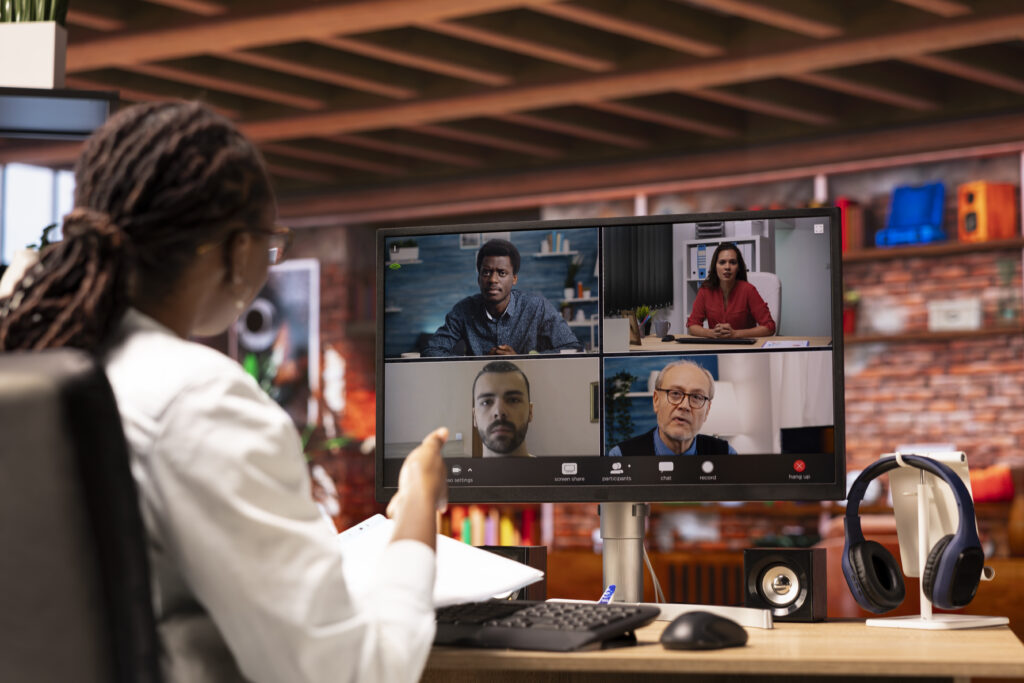
This does not mean attendance becomes irrelevant. It means attendance returns to its actual job: providing a consistent, auditable baseline of when employees were formally available. That baseline matters for payroll, for statutory compliance, for leave deduction, and for overtime calculation. It matters for knowing who was on shift and who was not. These are operational necessities that do not go away just because the employee works from home.
What changes is the expectation. The attendance record is one input among several, not the single measure of whether an employee is performing. A clean timecard from a remote employee means they clocked in and clocked out. It does not mean they were productive, and it was never supposed to.
What Attendance Was Actually Built For
The 2022 Employment Act amendments formalised the right for employees to request flexible work arrangements under Sections 60P and 60Q. KESUMA published comprehensive FWA Guidelines in December 2024. By 2026, over 2,800 organisations and more than 565,000 employees have formally adopted FWA. The rules exist. The policy frameworks are in place.
What most companies have not done is recalibrate their expectations of the attendance system to match.
TimeTec Attendance tracks the reporting channel for every punch, so management can see which employees clocked in via biometric device, GPS mobile, or web browser. It records GPS location at the point of clock-in for remote employees. It sends tardiness alerts for late arrivals and early departures regardless of location. It manages shift scheduling across fixed, rotating, and overnight patterns. It tracks overtime hours, manages OT requests and approvals, and feeds the calculations directly into payroll. It produces over 42 customisable reports covering time cards, attendance sheets, tardiness, OT hours, shift rosters, and gross wages. And it does all of this across multiple locations, branches, and industries, whether the company runs a single office, a chain of retail outlets, a factory floor with rotating shifts, or a hybrid team spread across several states.
That is what an attendance system should do. Provide the baseline. Feed payroll. Maintain the audit trail. Apply the same rules consistently to every employee regardless of where they work or what industry they are in.
The trust question, whether the employee is actually productive, belongs to management. It is answered in one-on-ones, in project reviews, in the quality of deliverables, and in the patterns that emerge over weeks and months of working together. No clocking method, no matter how sophisticated, will ever replace that.
Stop asking your attendance system to solve a problem it was never designed to solve. Let it do what it was built for, and build trust the way trust has always been built: through results.