
Someone works through a public holiday to hit a deadline. The manager says, take a day off next week to make up for it. Nobody writes it down. Two months later the employee wants the day, the manager half-remembers the promise, and the payroll record shows nothing. That informal generosity is how most replacement leave in Malaysia is handled, and it is exactly why it turns into a dispute.
Replacement Leave Has Rules, Not Just Goodwill
Replacement leave applies when an employee actually works on a public holiday, and it is not the automatic form of compensation. For employees covered by the overtime provisions of the Employment Act, the statutory default for working a public holiday is cash, two days’ wages at the ordinary rate. Replacement leave only takes the place of that payment when both sides explicitly agree to it.

That changes what a day off in lieu actually is. It is not a favour the employer chooses to grant. It is a substitution of a statutory entitlement, and a substitution that was never agreed or recorded can leave the company still owing the original cash.
Two Things People Confuse
Replacement leave gets muddled with substitute holidays, and they are not the same.
| Substitute holiday | Replacement leave | |
|---|---|---|
| When it arises | A gazetted public holiday falls on a rest day | An employee actually works on a public holiday |
| Trigger | Automatic, required by law | By agreement, as compensation for working |
| Does the employee work first? | No | Yes |
| Default alternative | None, the next working day becomes the paid holiday | Cash, two days’ wages at the ordinary rate |
A substitute holiday happens on its own when the calendar collides with a rest day. Replacement leave has to be earned by working, and then agreed. Treating the second like the first is where records start drifting from reality.
Where the Favour Falls Apart
An off day granted by word of mouth has no balance, no date, and no proof. It gets forgotten, or claimed twice, or quietly dropped when the manager who promised it moves on. And because replacement leave is only valid where it was agreed in place of the cash entitlement, an untracked promise is not just a morale problem, it is an open compliance question about whether the employee was ever properly compensated at all.
The generosity was real. The record was not, and only one of those survives an audit.
A Promise Is Not a Record
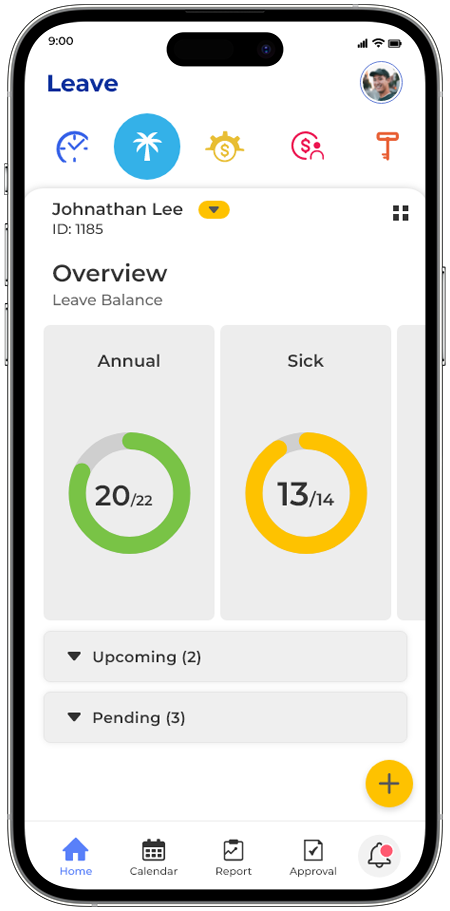
The fix is to stop treating time off in lieu as a verbal IOU and issue it as a proper leave entitlement. In a system like TimeTec Leave, replacement leave can be granted as its own leave type with a real balance, credited when it is earned and drawn down when it is taken, visible to both the employee and the approver. The promise becomes a line in the record instead of a memory two people recall differently.
A favour is something one person remembers. A record is something both people can see. Replacement leave only works when it is the second.