
The habit is easy to fall into. You hire someone part-time, agree an hourly rate, multiply the hours worked, and pay that. It feels like the honest, efficient way to handle it. But part-time payroll in Malaysia is not an hourly-contractor arrangement, and the Employment (Part-Time Employees) Regulations 2010 give part-timers a set of statutory entitlements that “hours times rate” quietly skips.
A Part-Timer Is Still an Employee
Under the Regulations, a part-time employee is one whose agreed average working hours do not exceed 70% of the normal hours of a comparable full-timer in the same job. Someone working irregular hours at 30% or less of a full week falls into a separate “casual” category. The important point is that a part-timer covered by these Regulations is a proper employee under the Employment Act, not a freelancer paid purely for time on site.

That single classification pulls in a list of entitlements most hourly-rate arrangements ignore.
What the Regulations Actually Require
Part-timers are entitled to pro-rated annual leave and sick leave, paid public holidays, overtime at defined rates, and a rest day where they work five or more days a week. On top of that, statutory contributions do not pause because someone is part-time: EPF, SOCSO and EIS apply to their wages the same way they apply to a full-timer.
| Entitlement | How it applies to a part-timer |
|---|---|
| Annual and sick leave | Pro-rated against a full-timer’s entitlement, based on hours |
| Public holidays | Paid, calculated on a pro-rata basis |
| Overtime | Ordinary hourly rate for hours beyond the agreed normal hours up to a full-timer’s normal hours, then 1.5x beyond that |
| Rest day | Entitled where working five or more days a week |
| EPF / SOCSO / EIS | Apply to wages as normal, part-time status changes nothing |
Where “Just Pay by the Hour” Goes Wrong
Take a part-timer working about 60% of full-time hours. The hourly-rate habit pays for the hours worked and stops there. No pro-rated annual or sick leave. No public holiday pay for the gazetted days they did not work. Overtime, when it happens, paid flat instead of at the rate the Regulations set. And often no EPF or SOCSO, on the assumption that part-timers are outside the system.
Every one of those is a shortfall the employee is legally owed, and the missing EPF and SOCSO are a straight compliance failure that surfaces the moment there is an audit, a claim, or an injury. The arrangement that felt clean is actually a stack of small breaches, each one easy to prove after the fact.
Getting Part-Time Pay Right
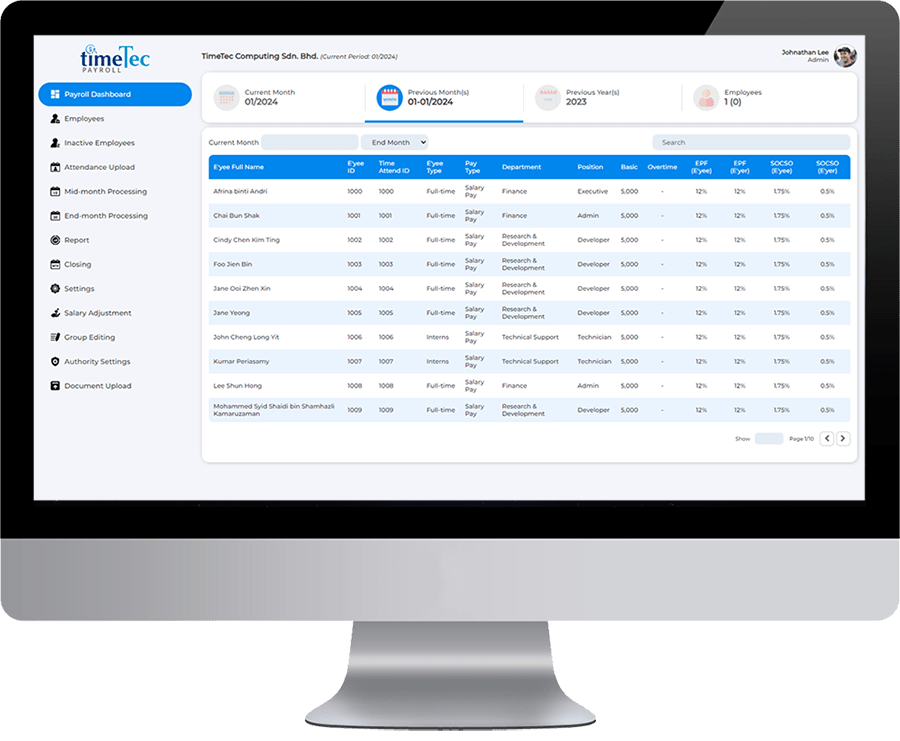
The fix is to stop treating part-timers as an hourly line and set them up as what they are: employees on a part-time basis, with their own entitlements. In a system like TimeTec Payroll, a part-time employee type can carry pro-rated leave and holiday rules, the correct overtime tiers, and the same statutory contributions as everyone else, so the pay run reflects the Regulations rather than a manual hourly calculation. When the rules sit in the setup, the pro-rating and the contributions happen on their own instead of depending on someone remembering them each cycle.
Part-time hours are flexible. The entitlements attached to them are not. The gap between paying for hours and paying what the law requires is exactly where a quiet underpayment turns into a claim.