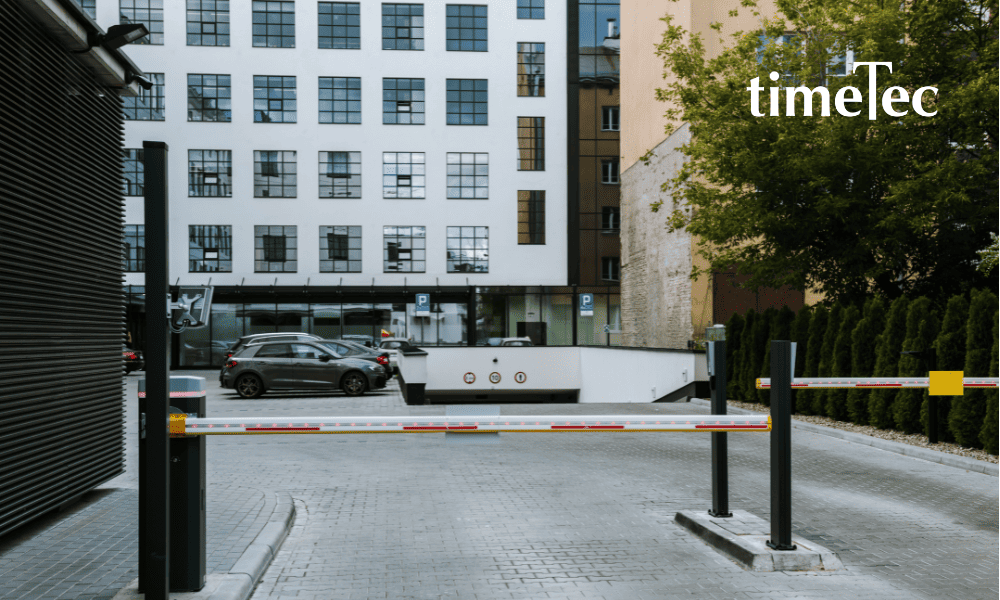
For decades, parking payment systems evolved around one objective — reducing cash handling.
From cash tickets to Touch ’n Go cards, then to bankcards and mobile payments, the parking industry has been steadily moving toward a fully cashless environment.
But cashless alone is no longer enough.
Today, users demand something more important: frictionless experience.
Nobody enjoys stopping at entry lanes, winding down windows, tapping cards, searching for wallets, waiting for authorization, or scanning for payment terminals. Parking is not the destination; it is merely part of the journey. The smoother the journey, the better the system.
This is where two payment models are rapidly emerging as the future trend of parking:
- DuitNow QR
- eWallet Direct
Both are reshaping how parking operators think about payment collection, traffic flow, system design, and user experience.
The Common Foundation: Payment Apps + LPR
Despite their differences, DuitNow QR and eWallet Direct share two important foundations.
1. Both are tied to payment apps
Whether it is:
- eWallet apps
- Banking apps
- Parking applications,
The smartphone becomes the new parking payment device.
This shifts parking away from hardware-centric payment infrastructure toward software-driven ecosystems.
2. Both rely on LPR technology
At the center of both systems is:
License Plate Recognition (LPR)
The vehicle plate number becomes the identity.
Instead of relying on:
- Paper tickets
- Stored-value cards
- RFID tags
- Physical tokens
The system identifies the vehicle directly and links it to its owner or payment activity.
This is a major transformation in parking technology.
The car plate is becoming the new parking credential.
The Key Difference Between DuitNow QR and eWallet Direct
Although both leverage LPR and payment apps, their operational philosophies are different.
eWallet Direct: The Fully Frictionless Model
Under eWallet Direct:
- Users pre-register their vehicle plate number inside a payment app.
- The payment app is linked to a parking system.
- Upon entry and exit, the LPR system recognizes the vehicle automatically.
- Parking fees are auto-deducted directly from the registered payment account.
The result:
- No ticket
- No card tapping
- No scanning
- No stopping
- No payment interaction
Simply drive in and drive out.
This creates a truly:
- Touchless
- Cashless
- Frictionless parking experience.
An additional advantage is structured parking history:
- Users can easily trace parking records
- Review transactions
- Obtain receipts
- Manage claims or reimbursements.
Parking becomes digitally organized.
DuitNow QR: Flexible and Open
DuitNow QR works differently.
Users do not need to pre-register their car plate number.
Instead:
- The LPR system calculates parking fees,
- A dynamic DuitNow QR appears at the exit,
- Users scan and pay using any supported bank app or eWallet app.
This creates:
- Near-frictionless parking
- Broad payment accessibility
- Lower barriers to adoption
The flexibility is powerful because users are free to choose:
- Any preferred banking app
- Any participating eWallet
- Without prior setup
However, compared to eWallet Direct, the parking history is less organized because transactions are spread across different apps and payment platforms, and mixed with non-parking transactions.
Why eWallet Direct Will Eventually Prevail
User experience always determines the direction of technology adoption.
When comparing both models side by side, eWallet Direct naturally represents the next stage of parking evolution.
Because ultimately:
the best payment experience is the one users no longer need to think about.
Just as highway tolling evolved from cash to RFID auto-deduction, parking is moving toward invisible payments.
Over time, we foresee users gradually shifting:
- From Touch ’n Go cards
- From bankcards,
- From DuitNow QR,
toward eWallet Direct ecosystems.
Not because other methods are bad, but because frictionless convenience always wins.
Why Parking Operators Prefer eWallet Direct
1. No Readers Required
Traditional payment infrastructure involves:
- card readers,
- terminals,
- scanners,
- ticketing components,
- and mechanical interaction points.
These increase:
- hardware investment,
- maintenance requirements,
- technical failures,
- and payment variance issues.
With eWallet Direct:
- many physical readers become unnecessary,
- lanes become simpler,
- operations become cleaner,
- and system reliability improves.
Less hardware means fewer operational headaches.
2. Lower MDR Means Higher Parking Income
Merchant Discount Rate (MDR) has become one of the most important operational costs in modern parking.
Card-based payments generally carry higher MDR.
In contrast:
- DuitNow QR,
- and especially app-based direct deduction models,
often offer lower transaction costs.
For high-volume parking sites, even small MDR differences significantly affect profitability.
Lower MDR directly translates into:
- higher net parking income,
- better operational margins,
- and faster ROI.
3. Smoother Traffic Flow
Every stopping point creates friction.
Every friction point creates congestion.
Card tapping, payment authorization, ticket scanning, and payment uncertainty all slow down exit lanes.
eWallet Direct removes most of these interruptions entirely.
The outcome:
- faster throughput,
- shorter queues,
- better peak-hour performance,
- and improved customer satisfaction.
For busy commercial sites, this operational advantage is enormous.
DuitNow QR Still Plays an Important Role
Despite the long-term direction toward eWallet Direct, DuitNow QR remains extremely important.
In fact, the ideal parking strategy may be:
eWallet Direct as the primary payment method
with DuitNow QR as the backup option.
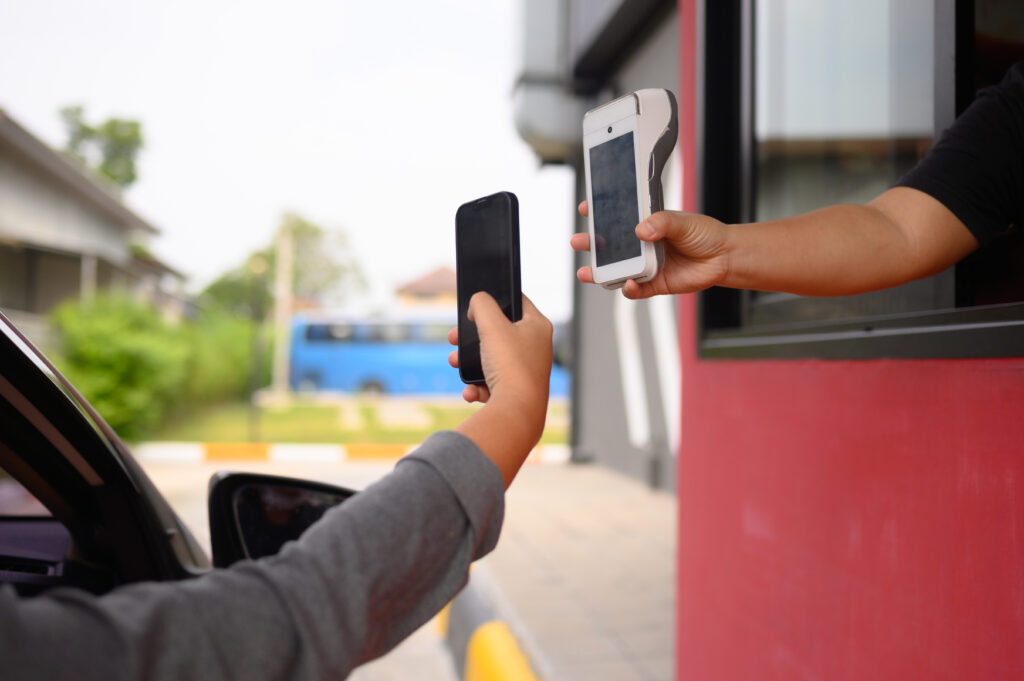
Because not every user:
- wants to pre-register,
- uses the same app,
- or is ready for full automation.
DuitNow QR provides:
- flexibility,
- inclusiveness,
- and universal accessibility.
It acts as the perfect bridge between conventional cashless parking and fully frictionless parking.
Malaysia’s Parking Payment Transformation
Malaysia has already gone through several parking payment eras:
Phase 1 — Cash
Manual tickets and cash collection.
Phase 2 — Single Cashless
Touch ’n Go card dominance.
Phase 3 — Multiple Cashless Methods
Bankcards, eWallets, DuitNow QR, app payments, and hybrid systems.
Phase 4 — Frictionless Parking
LPR + eWallet Direct + invisible payment ecosystems.
The direction is becoming increasingly clear:
- touchless,
- ticketless,
- cashless,
- and eventually almost invisible.
We may not know exactly how long this transformation will take.
But the trend is already forming.
And at TimeTec, we continue to relentlessly advocate this evolution toward a smarter, smoother, and more frictionless parking future.
03-8070 9933 | Email | www.timeteccloud.com | Interest Form