
Take a hypothetical condominium with 500 units, 350 of them sold. Every month, the building still needs cleaning, security, lift maintenance and a growing sinking fund — for all 500 units, not just the 350 with buyers.
So who pays the maintenance charges for unsold units? Legally, the answer is clear. In practice, the more useful question is whether the development’s records still treat those 150 units as parcels that owe charges, or quietly leave them out because no purchaser is attached.
Who Pays Maintenance Charges for Unsold Units
In Peninsular Malaysia and Labuan, where the Strata Management Act 2013 (SMA) applies, the developer remains responsible for maintenance charges on unsold parcels, whether management is handled by the developer, JMB or MC. Sarawak has its own Strata Management Ordinance 2019.
- Before the JMB is formed. During the developer’s management period, the developer must pay the Charges and sinking fund contribution for unsold parcels, at the same amount a purchaser would pay (section 12(2)). Failing to do so is an offence (section 12(9)).
- Once the JMB is formed. The developer pays the Charges and sinking fund contribution for unsold parcels to the JMB (section 25(2)).
- Once the MC is formed. During the preliminary management period, the Act counts the developer as a proprietor in respect of unsold parcels for the Charges payable to the MC (section 52). The MC’s later provisions under sections 59, 60 and 61 continue to govern maintenance charges and sinking fund contributions for parcels the developer has not sold.
The Act treats the developer like any other owner for these parcels. It votes for them at JMB meetings (section 22), and it pays for them.
An unsold unit is not a unit without an owner. The developer remains responsible for its charges, while a purchaser’s liability generally begins upon delivery of vacant possession.
Where the Charges Can Go Missing
The law is settled. The records are where things can slip.
When the developer manages itself. During the developer’s management period, the developer is both the party collecting charges and the party paying them for unsold units. If billing is built around purchasers, unsold parcels can drop out of the billing run entirely, leaving shortfalls that may only surface during an audit or management handover.
When occupancy is mistaken for ownership. A show unit or an unsold unit rented out by the developer may be occupied without having been sold. Occupancy alone does not transfer the developer’s statutory responsibility for the parcel’s maintenance charges.
When the handover date is missed. A signed sale agreement does not necessarily mean the purchaser must immediately start paying maintenance charges. Liability generally begins upon delivery of vacant possession. If management does not record that date correctly, charges may be assigned to the wrong party or omitted from billing. We looked at the payments that fall due at this point in The Advance Maintenance Fee Is Holding Up Your Handover.
When the JMB inherits the gap. Unpaid charges on unsold parcels do not disappear. They can surface in the accounts the developer hands over, leaving a new committee to discover a shortfall it did not create.
This is not a hypothetical risk. In January 2025, the Court of Appeal upheld a ruling against Zen Estates, the developer of Subang Parkhomes condominium, for failing to properly account for maintenance charges and sinking fund contributions. The developer had also promised purchasers free maintenance for the first year. Aging reports furnished by the developer showed more than RM1 million in receivables relating to six unsold units. The case demonstrates why unpaid contributions and proper account handovers cannot be overlooked.
Keeping Unsold Units Visible
None of this calls for a special process for developers. It calls for unsold units to stay visible in the same records as every other unit.
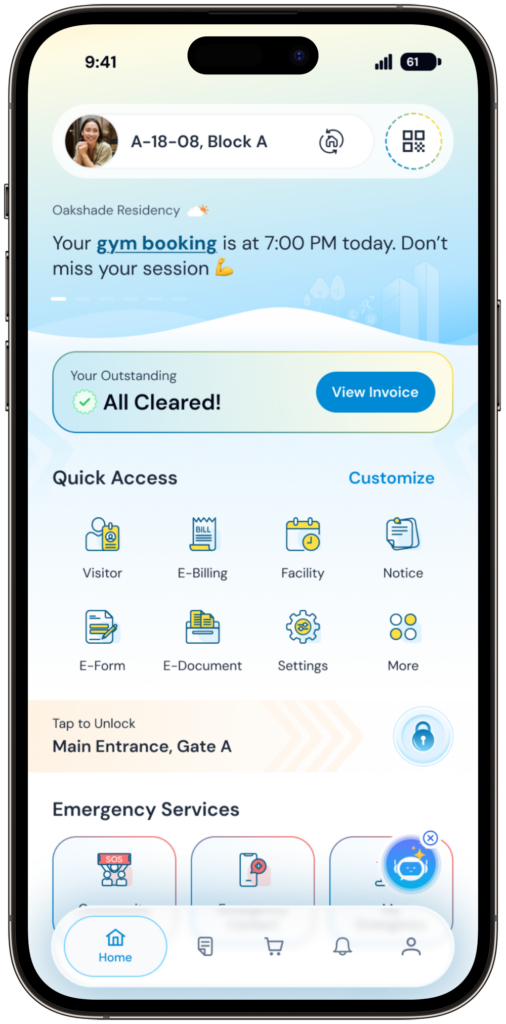
In iNeighbour, units can be classified as Owner, Rental, Tenant or Unsold, allowing management to maintain records of unsold parcels even when no purchaser is registered. When a unit is sold, management can update its ownership record while retaining the previous owner history. The billing account must also be updated to ensure that charges are assigned to the correct party from the applicable liability date.
For the committee, the E-Billing dashboard shows allocated and outstanding amounts across the development, and the billing versus collections report, with transactions posted to i-Account, shows what has and has not been received. When charges for unsold parcels are correctly billed and recorded, outstanding amounts can be identified and followed up before they become a problem during handover.