
Most Malaysian companies keep a single “medical leave” balance. An employee falls sick, an MC comes in, a day is deducted, and nobody looks closer. It feels tidy, and for outpatient sick days it is. The problem starts the moment someone is hospitalized, because hospitalization leave in Malaysia is not part of that balance at all, and running the two as one number is a Section 60F breach waiting to surface.
Sick Leave and Hospitalization Leave Are Two Separate Entitlements

Section 60F of the Employment Act 1955 sets out two different things, and since 1 January 2023 the law treats them separately. Outpatient sick leave, the ordinary MC days, is one entitlement. Hospitalization leave is another, and the amendment that took effect in 2023 made it explicit that hospitalization leave is granted in addition to outpatient sick leave, not drawn from the same pool.
That single word, addition, is where most systems go wrong. A company that subtracts a week in hospital from an employee’s annual sick-leave days is applying a rule the law removed years ago.
What the Law Actually Gives
Outpatient sick leave scales with service: 14 days a year for under two years, 18 days for two to five years, and 22 days for more than five years. Hospitalization leave is a separate entitlement of up to 60 days a calendar year where a doctor certifies that hospitalization is necessary, and it sits on top of the outpatient days. Worth noting: an employee certified as needing hospital care still qualifies for hospitalization leave even if not physically admitted.
| Outpatient sick leave | Hospitalization leave | |
|---|---|---|
| Governing law | Section 60F, Employment Act 1955 | Section 60F, Employment Act 1955 |
| Entitlement | 14 / 18 / 22 days by years of service | Up to 60 days per calendar year |
| Applies when | Certified sick, no hospitalization needed | Hospitalization certified as necessary |
| Relationship | The base entitlement | Granted in addition, not deducted from the above |
| Carry forward | No, resets each calendar year | No, resets each calendar year |
Where Employers Get It Wrong
Picture an employee with three years of service. She has 18 outpatient sick days for the year. She is warded for eight days after surgery. Under the law, those eight days come from her hospitalization entitlement, and her 18 outpatient days remain untouched.
A company running one combined balance deducts the eight from her 18, leaves her with 10, and quietly denies her something the Act grants. It looks like a harmless bookkeeping shortcut. It is not. The moment that employee, a future auditor, or a Labour Office query looks at the record, the shortfall is a compliance failure with her name on it. The error almost always runs against the employee, and it is exactly the kind of thing that turns into a claim the employer loses.

The reverse mistake is just as common: treating every long MC as hospitalization leave, or carrying balances forward when the law says both entitlements reset each calendar year. Either way, the record no longer matches Section 60F, and payroll is calculating from a number that is wrong.
Holding the Two Correctly
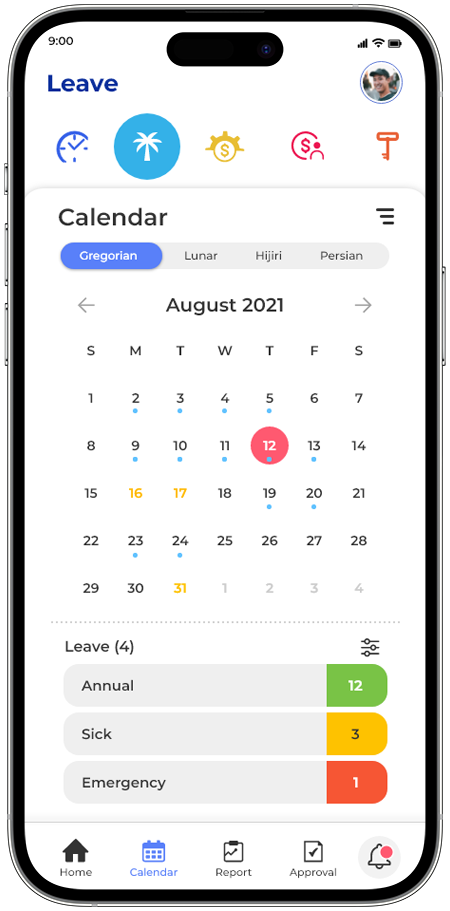
The fix is to stop treating “medical leave” as one bucket and configure the two entitlements as what they legally are: separate leave types with their own rules. TimeTec Leave lets you define outpatient sick leave and hospitalization leave as distinct types, each with its own annual entitlement and its own service-based rules, so a hospital stay draws down the right balance and never eats into the employee’s sick days. Because leave, attendance and payroll stay connected, the days flow into payroll from the correct entitlement rather than from a single figure someone adjusted by hand.
When the two are held separately at the system level, the Section 60F distinction stops depending on whoever is keying in the MC that morning. The rule enforces itself.
One balance is simpler to key in. Two balances are what the law actually requires, and the gap between them is a compliance claim you have not noticed yet.