
Somewhere in your development, a unit is probably listed on a booking platform right now. Guests arrive with a door code the office never issued, stay a night or two, and leave before the guardhouse ever learns their names. Short-term rentals in strata developments across Malaysia have gone from rare to routine, and most committees are still deciding how they feel about it.
There is no clean answer here. Owners have a real argument. So does the community. Below we lay out both, look at what the law actually allows, and then get to the part that decides whether any of it holds.
Why the Short-Term Rental Debate Splits Strata Communities
The disagreement is not really about noise or strangers. It goes deeper, into two honest views of what owning a strata unit means.
One side sees a property they paid for and should be free to earn from. The other sees a shared building whose safety depends on knowing who is inside. Both are right from where they stand. That is why the argument rarely ends at an AGM. It just gets postponed to the next one.
The Case for Allowing It
An owner who buys a unit buys the right to use it and to earn from it. Long-term tenancy has always been accepted, so why treat a shorter stay any differently? Demand is real, especially near city centres, hospitals, and universities, and the extra income can help owners keep up with maintenance charges instead of falling behind on them.
Owners also make a fair point about behaviour. A rowdy long-term tenant causes more trouble than a quiet weekend guest. Banning short stays outright, they argue, punishes responsible owners for problems that better rules could handle on their own.
The Case Against
The community’s side is just as grounded. Strata living is shared risk by design. The whole security model assumes the people inside are known — residents, their tenants, their invited guests. A steady stream of overnight visitors who never appear in any record breaks that assumption quietly.
There are practical costs too. Lobbies, lifts, and pools wear faster under constant turnover. Insurance and liability were priced for homes, not for what is effectively a small hotel. And when short-stay units fill a block, it gets harder to reach quorum or build the stable committee a development needs to run.
At a Glance: Two Honest Positions
| The owner sees | The community sees |
|---|---|
| A property they paid for and can earn from | A shared building whose safety depends on known occupants |
| Demand that helps cover maintenance charges | Faster wear on lifts, lobbies, and facilities |
| Behaviour as the problem, not lease length | Unrecorded strangers holding access |
| Rules that target misconduct, not short stays | Quorum and committee stability at risk |
What the Law Actually Says
Here is where many committees are surprised. A community can restrict short-term letting in Malaysia — but only if it does the governance work first.
Under the Strata Management Act 2013, ownership does not override community usage rights. A management body can pass a by-law limiting or banning short-term rentals, but that by-law only carries weight if it is passed at a general meeting and properly registered. A rule announced in a WhatsApp group or pinned to the notice board will not survive a challenge. It is the same principle we covered in Can a Unit Owner Rent Out a Parking Lot to Non-Residents Under Malaysia’s Strata Act? — an owner’s rights are real, but they end where a properly registered by-law begins.
So the question shifts. It is not “can we stop it.” It is “have we set up the rules so our position holds when someone pushes back.”
The Real Question Is Enforcement
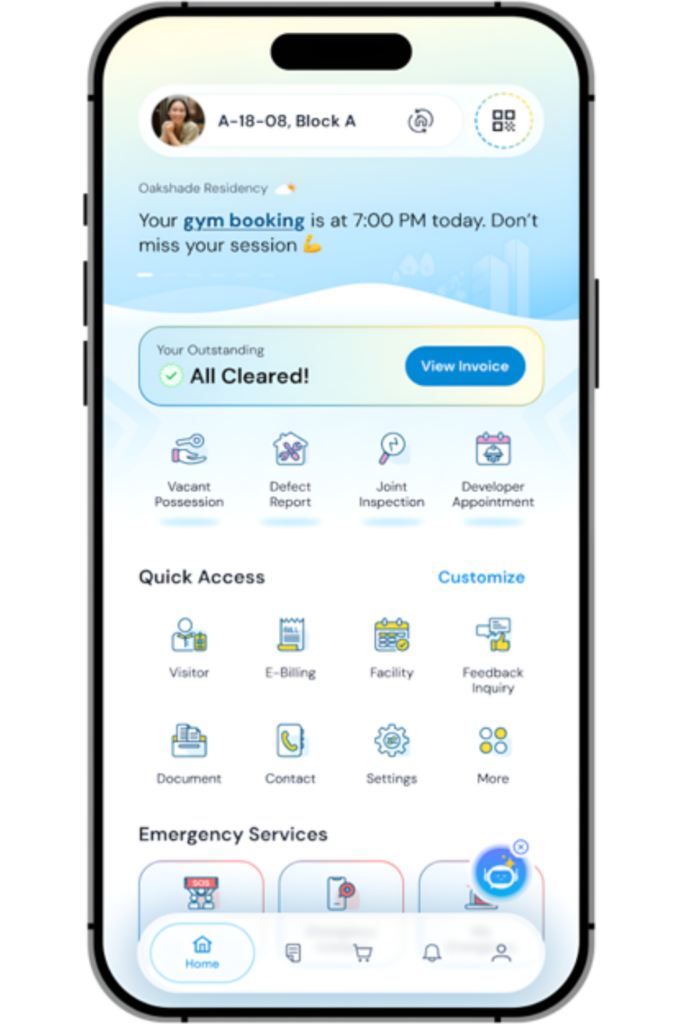
Whichever way a community leans, the decision is only as strong as its ability to back it up. This is the part committees tend to underestimate.
If you allow short-term rentals, you still need to know who is in the building. Every guest should be registered, carry access that expires when they leave, and sit in a record the guardhouse can see. If you ban them, you need proof — not a hunch that unit 12-3 keeps hosting strangers, but a visitor history that shows it.
Both outcomes need the same thing: a record. This is where a connected platform like iNeighbour earns its place, whatever the community decides. Visitor management ties every arrival to a unit and a host. Visitor profiles build a history over time, so a pattern of short-stay guests becomes something you can show at a hearing rather than argue about.
None of that settles the debate for you. It just makes sure that once you decide, the decision is real.