The physical credential is on its way out of the residential community — high-rise and landed alike. For years, getting a resident’s car past the barrier gate meant issuing something — a proximity access card, an RFID windscreen sticker — then managing that object for the entire life of the tenancy. That model is now being dismantled. The shift toward LPR vehicle access control means the credential is no longer an object at all, it is the plate already on the car.
This is not a feature upgrade. It is the quiet disappearance of an entire category of management-office work.
The hidden admin tail of card and sticker access
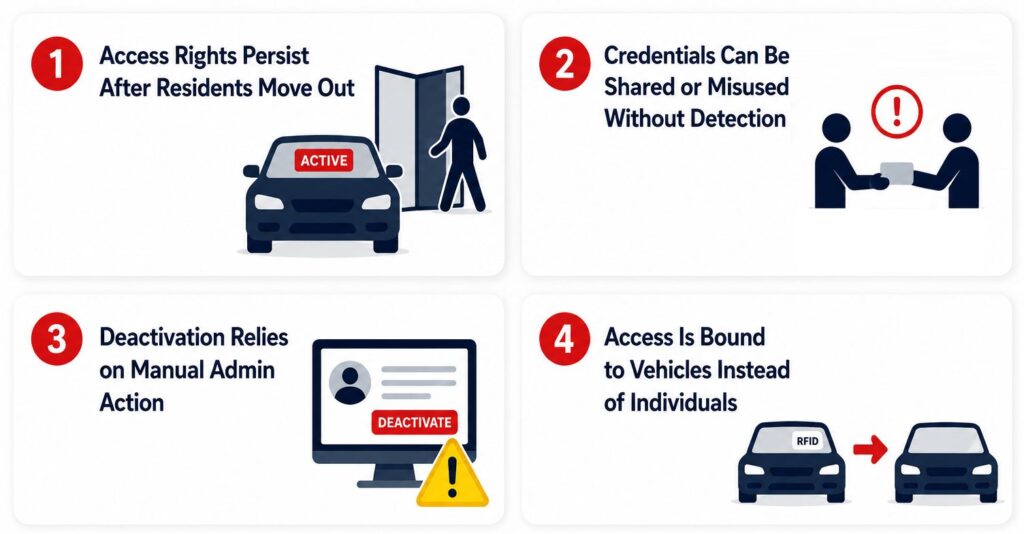
Cards and stickers became the default for a simple reason: for a long time, the plate could not be read reliably enough to grant access on its own, so the community handed each vehicle a physical credential instead. That made sense, what it also did was create a small operations department around this.
Every physical credential carries a lifecycle that someone has to manage. RFID stickers have to be stocked, then applied at the management office, one car at a time. Access cards have to be issued, replaced when lost, and chased when a resident moves out. None of this is the point of access control — it is the overhead the chosen method dragged in with it.
The deeper problem is what the credential actually authorizes. A card authorizes whoever is holding it, not the person it was given to — lent to a non-resident, it works exactly the same. An RFID sticker is bonded to one windscreen, so a resident who changes cars needs a re-sticker, and a tenant who moves out drives away with a live sticker still on the glass. Deactivation depends entirely on whether an admin remembers to do it. This is the same silent decay we described in Why Your Condo’s Vehicle Records Are Already Wrong — the credential rots for the same reason the records do.
What LPR vehicle access control replaces
When the registered plate becomes the credential, the object disappears and so does its admin tail. There is nothing to stock, nothing to apply, nothing to hand back at move-out.
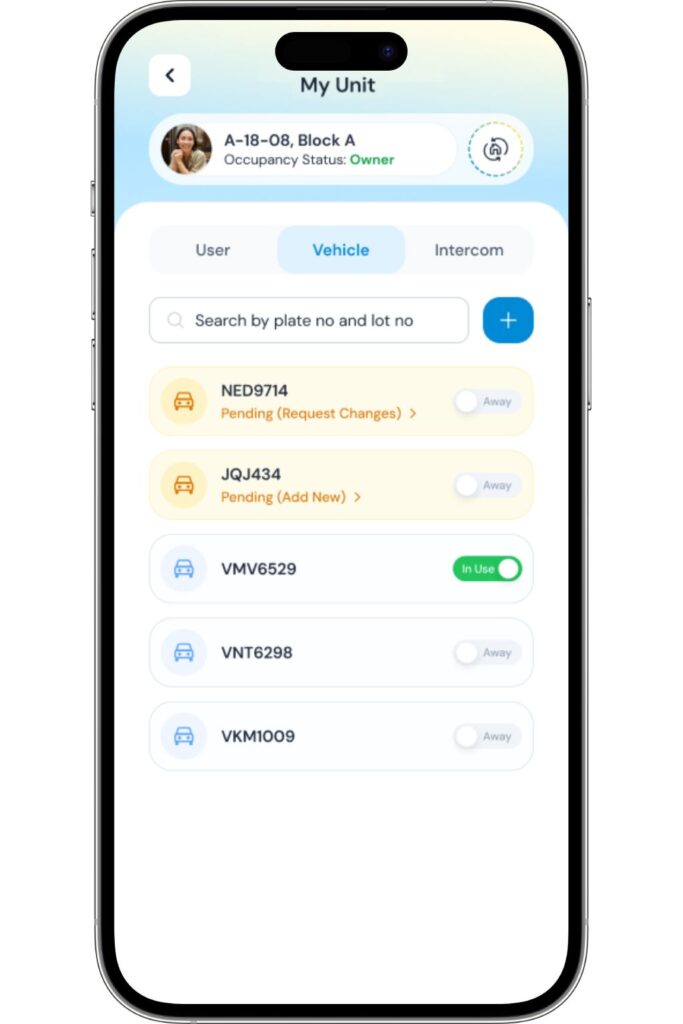
In iNeighbour, a resident’s vehicle is registered against the unit, with the plate tied to the tenancy record. The gate reads the plate; access follows the record. When a lease ends, access ends with it — deactivation is a record update, not a physical object the management office has to recover. A defaulter can be blocked at the same layer, because the credential granting entry and the tracking obligations are now one system, not a sticker and a spreadsheet that disagree.
The credential stops being something the community issues and starts being something the car already carries.
Why the shift is happening now
Two pressures make physical credentials hard to justify. Lease churn and multi-site portfolios mean the issue-replace-recover cycle multiplies across hundreds of units and several developments — work that does not scale with the same admin team. And LPR is increasingly already at the gate for visitor and parking control, so using it for resident access too is a near-zero marginal step rather than a new investment.
A card authorizes whoever holds it. A plate authorizes the car you registered. The credential was never the point. Getting the right vehicle through the gate was.