Parking is something millions of Malaysians pay for every day, yet surprisingly little information is available on the actual size of Malaysia’s parking industry.
Unlike toll collection, public transport or other regulated infrastructure sectors, there is no single authority that publishes the total amount Malaysians spend on parking each year. Parking revenue is fragmented across thousands of shopping malls, office buildings, hospitals, airports, hotels, universities, commercial developments and local authorities.
Nevertheless, by looking at available industry data, public parking collections, parking capacity and typical parking rates, we can attempt to estimate the size of Malaysia’s parking revenue market.
For simplicity, parking revenue can be divided into three major categories:
- Casual Parking
- Season Parking
- On-Street Parking
Based on our market observations and available public information, we estimate that Malaysia’s total annual parking revenue could be in the region of RM5.2 billion to RM6.9 billion, with approximately RM6 billion per year as a reasonable midpoint for discussion.
Casual Parking: The Largest Revenue Contributor
Estimated annual market:
RM3.5 billion – RM4.5 billion
Approximate share:
65–70% of Malaysia’s parking revenue
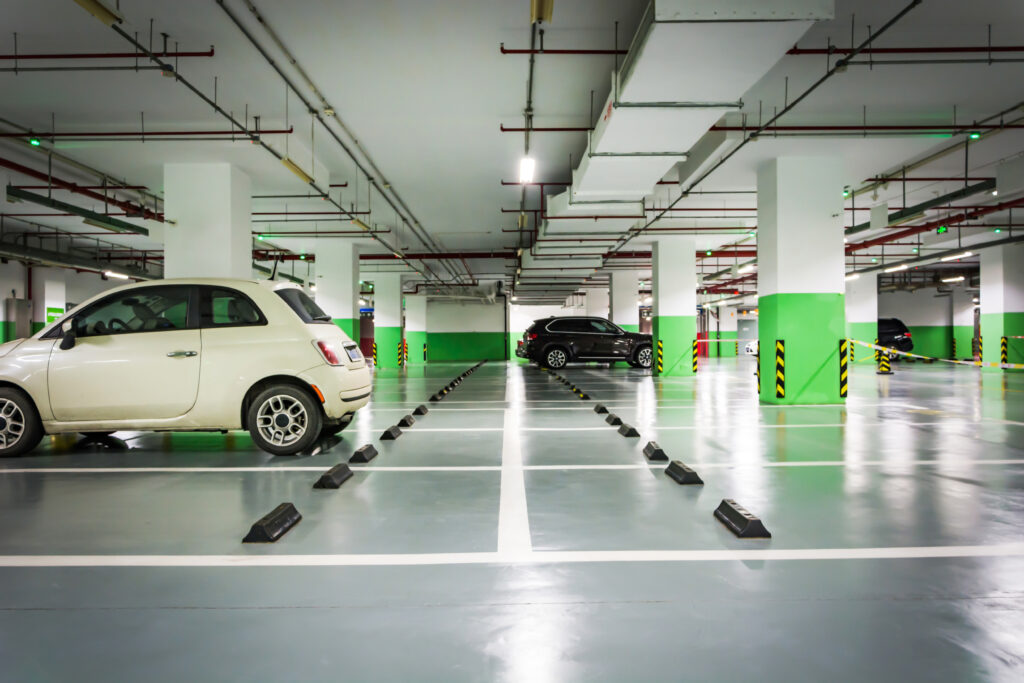
Casual parking refers to motorists paying according to their parking duration, typically by the hour or by entry.
It covers parking at locations such as shopping malls, hospitals, airports, hotels, commercial buildings, tourist attractions, transportation hubs and mixed developments.
Casual parking is likely to be by far the largest contributor to Malaysia’s overall parking revenue.
The reason is simple: one parking bay can generate revenue several times a day.
Consider a casual parking bay that generates an average of RM20 per day. Over a year, that single bay could potentially generate more than RM7,000 in parking revenue.
High-traffic locations can generate considerably more.
The scale becomes significant when multiplied across the enormous number of privately operated parking bays throughout Malaysia.
Some public company disclosures provide useful reference points.
KLCCP Stapled Group, for example, reported RM66.4 million in car park management revenue in 2023, with increased revenue attributed partly to higher foot traffic at Suria KLCC and events within the KLCC Precinct.
By 2024, KLCCP reported managing 17,421 car park bays within its management services portfolio, illustrating the considerable scale that a relatively small number of major commercial properties can represent.
Another Malaysian listed company reported approximately RM74.3 million in revenue from its car park operations in FY2025, covering 20 parking facilities with approximately 20,200 bays.
These figures should not simply be extrapolated to every parking bay in Malaysia, because parking rates, occupancy and business models vary substantially. Nevertheless, they demonstrate why off-street parking represents a sizeable commercial industry.
Season Parking: Smaller Revenue, but Highly Recurring
Estimated annual market:
RM1.2 billion – RM1.6 billion
Approximate share:
20–25%
Season parking is particularly important at office towers, commercial buildings, industrial areas, residential developments and transportation hubs.
Unlike casual parking, the same parking bay normally generates only one fixed payment each month.
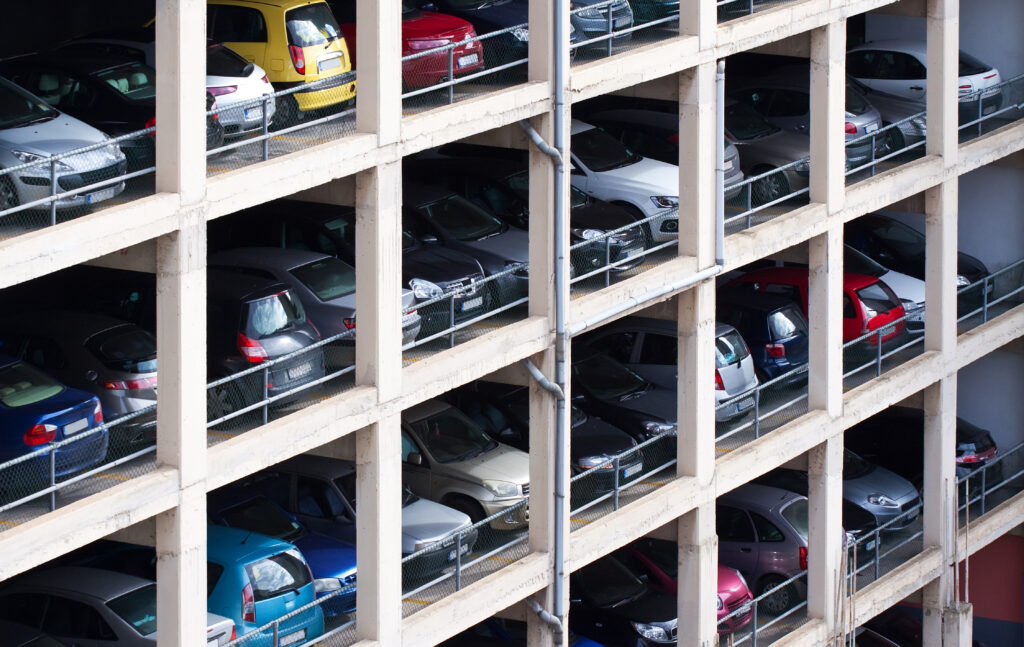
For example, if a season parker pays RM200 per month, the annual revenue is:
RM200 × 12 months = RM2,400 per year
Compare this with a busy casual parking bay that might generate RM20 per day:
RM20 × 365 days = RM7,300 per year
This explains why casual parking can generate considerably more revenue per bay.
However, season parking has one major advantage for parking operators and property owners:
predictability.
Season parking creates recurring monthly revenue and is less affected by daily fluctuations in visitor traffic.
It is therefore common for office buildings and mixed developments to maintain a combination of casual and season parking.
From a revenue-management perspective, finding the right ratio between season and casual allocation is important. Allocating too many bays to season parking could sacrifice higher casual parking revenue, while allocating too few may negatively affect tenant satisfaction and predictable recurring income.
On-Street Parking: Smaller Market, Huge Transaction Volume
Estimated annual market:
RM500 million – RM800 million
Approximate share:
8–12%
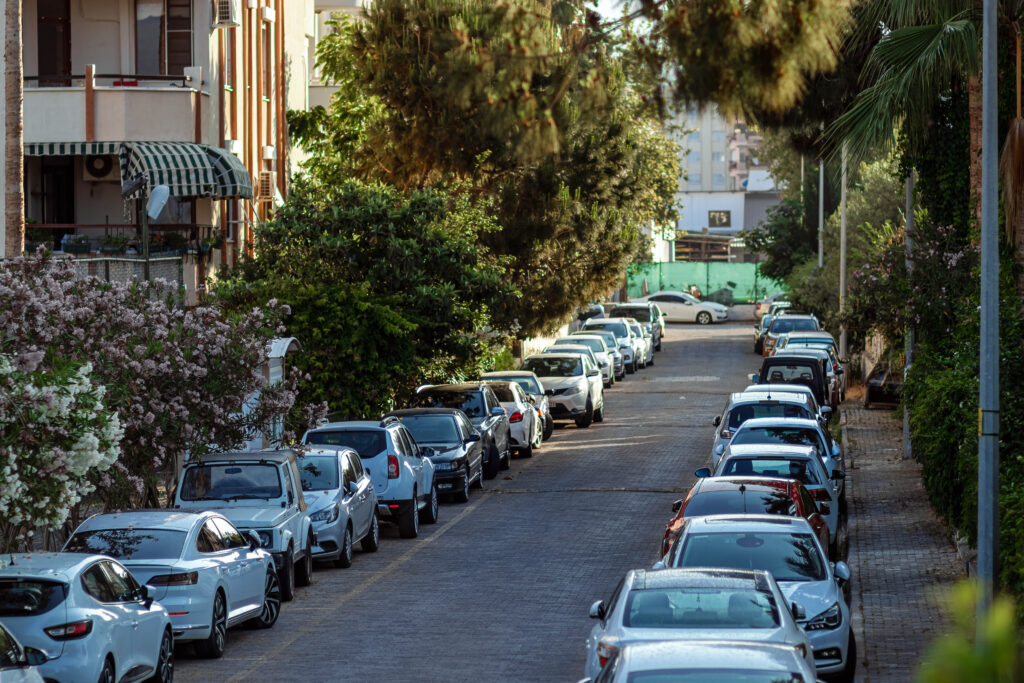
On-street parking operates differently because it is largely controlled by city councils and local authorities.
Unlike privately operated parking facilities, useful public collection figures are available for some jurisdictions.
For example, Selangor’s local authorities collected approximately RM75.9 million in parking charges in 2023.
More recent figures show further growth. Based on reported collections from the participating local authorities, Selangor’s 2024 parking collections exceeded RM85 million. Major contributors included MBSA at RM18.9 million, MBPJ at RM13.8 million, MBDK at RM12.2 million and MBSJ at RM11.4 million.
When similar parking programs operated by local authorities across Kuala Lumpur, Penang, Johor, Perak, Negeri Sembilan, Melaka, Sabah, Sarawak and other states are considered, we estimate Malaysia’s total on-street parking payment market could reasonably fall within the RM500 million to RM800 million range annually.
Although this is much smaller than private off-street parking, on-street parking has another attractive characteristic:
very high transaction frequency.
A motorist may only pay RM0.60, RM1 or several ringgit for each parking session, but millions of such transactions can occur.
As parking increasingly shifts towards mobile applications with cashless payment methods, on-street parking is becoming an increasingly important part of the digital parking ecosystem.
Malaysia’s Estimated RM6 Billion Parking Market
Putting the three categories together gives us the following working estimate:
| Parking Category | Estimated Annual Revenue | Approximate Share |
| Casual Parking | RM3.5–4.5 billion | ~67% |
| Season Parking | RM1.2–1.6 billion | ~23% |
| On-Street Parking | RM0.5–0.8 billion | ~10% |
| Total | RM5.2–6.9 billion | 100% |
Taking the midpoint gives an estimated Malaysian parking market of approximately:
RM6 billion per year
with a simplified revenue composition of:
RM4.0 billion Casual Parking
RM1.4 billion Season Parking
RM0.6 billion On-Street Parking
It must be stressed that these figures are industry estimates rather than official national statistics. Malaysia currently does not have a centralized database recording parking revenue across private and public parking facilities.
Actual market size could therefore be higher or lower.
Nevertheless, the estimate provides a useful indication of the economic scale of parking as an industry.
Parking Is Increasingly a Payment Business
There is another interesting way to look at these numbers.
Parking used to be mainly an infrastructure business.
An operator installed barriers, ticket dispensers, autopay machines and parking equipment, and motorists paid cash to exit.
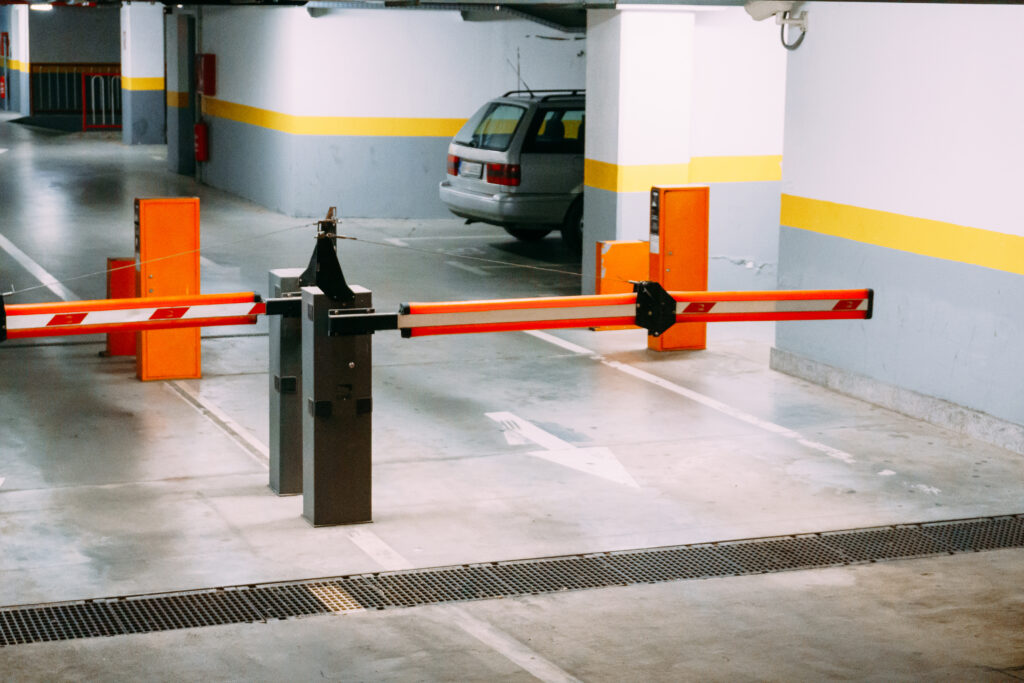
Today, parking is increasingly becoming a digital transaction business.
A RM6 billion parking market potentially represents billions of ringgit flowing annually through payment channels including:
- Touch ‘n Go Card
- Bank cards
- DuitNow QR
- eWallets
- Mobile applications
- POS for valet parking
- Online banking
- Recurring season parking payments
Therefore, whoever manages parking payments increasingly occupies an important position within the parking value chain.
This is particularly significant for casual parking. If approximately RM4 billion of parking revenue comes from casual transactions, even relatively small differences in payment processing costs can become substantial when multiplied across the entire market.
A difference of just 0.5 percentage point in payment cost on RM4 billion, for example, represents:
RM20 million per year.
That helps explain why payment technology, merchant discount rates, settlement systems and direct wallet integrations have become increasingly important components of modern parking systems.
Technology Can Also Expand Parking Revenue
Digitalization is not merely changing how motorists pay.
It can potentially increase the amount of parking revenue actually collected.
Technologies such as License Plate Recognition (LPR), cashless payments, mobile parking applications, real-time occupancy monitoring, automated enforcement and AI-powered parking management can reduce leakage and make payment more convenient.
For private parking operators, better data can also help optimize parking rates.
Instead of maintaining static parking rates for years, operators can analyze:
- occupancy by hour and day;
- average parking duration;
- peak and off-peak utilization;
- season parking utilization;
- entry and exit patterns;
- payment preferences; and
- revenue per parking bay.
Parking therefore gradually changes from simply collecting parking fees into the more sophisticated discipline of parking revenue management.
A RM6 Billion Industry Hidden in Plain Sight
Parking is rarely viewed as a major industry because each individual transaction is relatively small.
A motorist may pay RM3, RM5, RM10 or RM20 and think little about it.
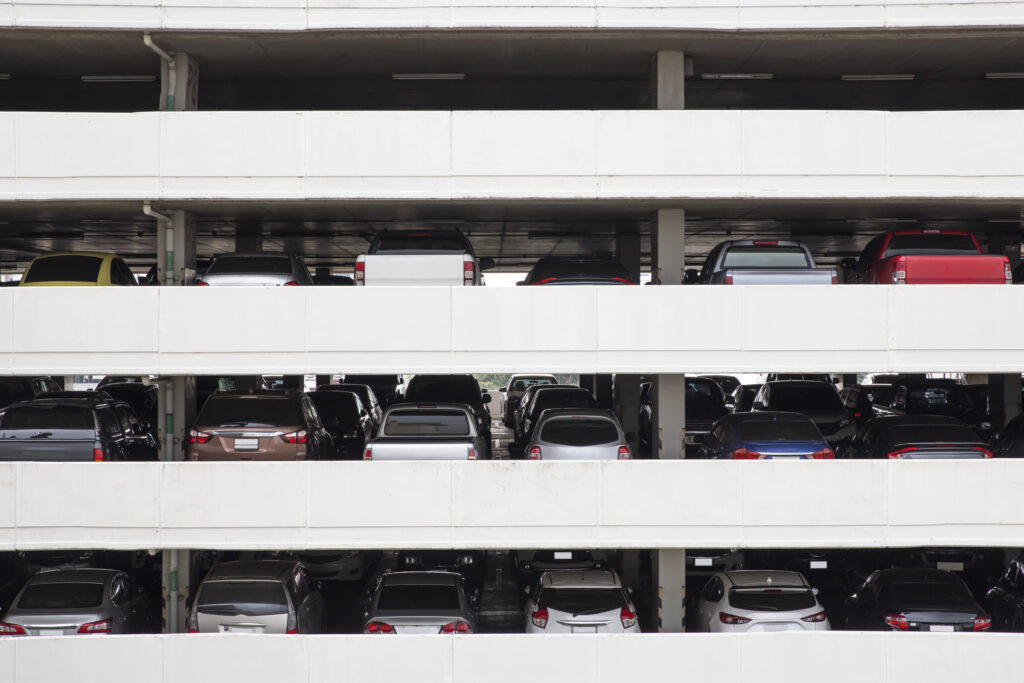
But multiply those payments across millions of motorists, millions of vehicles, thousands of parking facilities and 365 days a year, and the numbers become substantial.
Our estimate suggests that Malaysians could be spending approximately RM6 billion annually on parking, of which roughly two-thirds comes from casual parking.
And this figure only represents parking charges.
If the wider parking economy—including parking equipment, software subscriptions, maintenance, payment processing, enforcement, valet parking, advertising, EV charging and other ancillary services—is included, the economic value of Malaysia’s overall parking ecosystem would be considerably larger.
As Malaysia continues its transition towards cashless, ticketless, touchless and increasingly AI-driven parking, this seemingly traditional industry is quietly evolving into a sizeable technology, data and payment ecosystem.
The parking bay may remain physical.
But increasingly, the business behind it is digital.
03-8070 9933 | Email | www.timeteccloud.com | Interest Form