
Almost every company has an onboarding checklist. Someone owns it, it runs the same way each time, and a new hire is set up, documented, and contributing within days. Ask the same company how it handles an exit, and the answer is usually vaguer: a resignation letter, a handover of sorts, the last salary paid at some point, and access switched off whenever IT gets round to it. The asymmetry is telling, because the exit is where the real legal and financial obligations concentrate, and where they most often leak.
The Exit Has Hard Deadlines

An employee leaving is not an open-ended administrative task. It runs on statutory clocks. Under the Employment Act, final wages are due within one day of the contract ending where the employee served proper notice, and within three days where they left without it. Miss that window and the company has underpaid a departing employee against a fixed legal deadline, which is precisely the kind of claim an ex-employee has both the time and the motive to pursue.
The tax obligation is sharper still, and more often missed. For a resigning employee, the employer is required to notify the tax authority of the cessation using Form CP22A at least 30 days before the person leaves, and to withhold monies payable to them until the clearance letter is received. An employer who pays out the final salary in full and on time, without filing the notification or withholding pending clearance, has satisfied one obligation by breaching another. Getting the exit right means holding both in view at once, on the same short timeline.
The Obligations Do Not End When the Person Does
The assumption that a departure closes the file is where the second set of leaks appears. Records do not leave when the employee does. Section 61 requires employee records to be kept for six years from the date of the last entry, and that duty runs well past the final working day. A company that clears out a leaver’s data to tidy up has not simplified anything; it has destroyed records it was legally required to hold.

The same applies to the loose financial ends. Final statutory contributions have to be processed and the leaver’s status updated, and any accrued but untaken annual leave has to be encashed and paid. None of this is complicated in isolation. It leaks because it happens at the exact moment attention has moved on, scattered across payroll, HR and IT, with no single owner making sure each piece is closed.
Access Is the Silent Risk
The obligation that gets the least attention is the one with the widest exposure. When someone leaves, their access to systems, data and premises should close cleanly and immediately. In practice it lingers, because revoking access is nobody’s defined job and there is no list of what the person could reach. A former employee with live credentials is a data-protection problem and a security one, and unlike a late payslip it is invisible until it is used. The company property that never came back sits in the same blind spot.
Why It Leaks, and How It Stops
The through-line in all of this is ownership. Onboarding works because it is a defined process with a checklist and a system behind it. Offboarding fails because it is treated as a series of favours people remember to do, rather than a process the organisation runs. The same discipline that made Onboarding a New Hire in Minutes, Not a Week possible is what the exit needs and rarely gets.
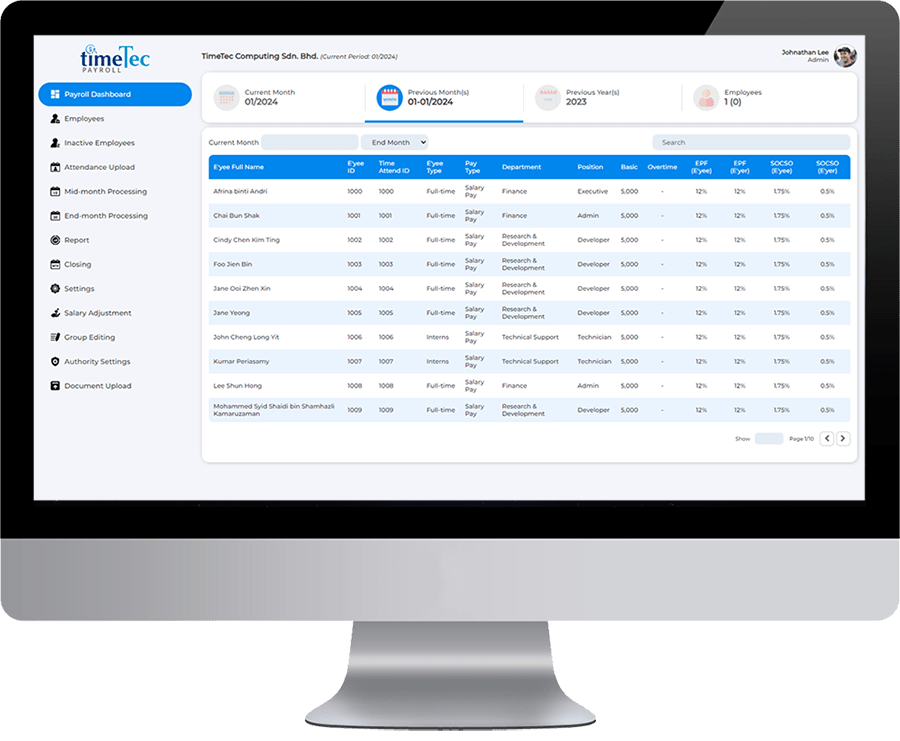
Holding it in a system is what closes the gap. In a platform like TimeTec HR, a departure can trigger the same structured sequence every time, the final pay calculated against the deadline, leave encashed, statutory status updated, records retained for their required life rather than deleted, and access closed as part of the process instead of as an afterthought. The exit stops depending on who remembers what, and starts running like the onboarding it mirrors.
The Door Marked Exit
A company is easy to judge by how it welcomes people. It is more honestly judged by how it lets them go. The onboarding is where the effort shows. The offboarding is where the compliance is, and where the quiet, expensive failures wait for the companies that never built a process for the door marked exit.