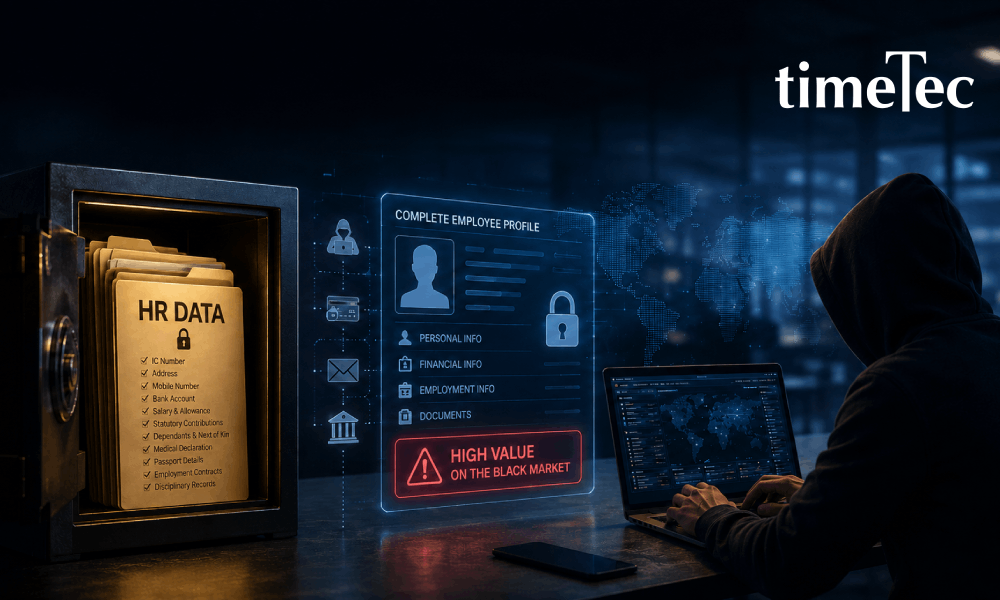
The Data Set Nobody Talks About Guarding
Every Malaysian company holds a data set that, if released to the wrong people, would cost more than most corporate breaches. It sits in the HR system. It contains every employee’s IC number, home address, mobile number, bank account, salary and allowance breakdown, statutory contribution numbers, dependants, next of kin, medical declaration, and often the passport details of foreign employees. In some systems it also holds signed employment contracts, appointment letters, and disciplinary records.
This is the file that, if extracted, would let a bad actor open loan accounts, run identity fraud, execute targeted phishing, or impersonate employees in banking transactions. It is also the file most Malaysian companies protect less rigorously than their customer database or financial records, because HR data has traditionally been treated as an internal-operations concern rather than a security one.
The 2025 PDPA amendments have closed that distinction. Employee personal data is now regulated with the same weight as any other personal data, and the breach exposure that comes with it is not theoretical.
Why HR Data Is a High-Value Target
Customer data breaches usually contain names, contact details, and purchasing history. Financial data breaches contain account numbers and transaction records. HR data breaches contain something more useful to a fraudster: a complete personal identity dossier for every employee, sorted, categorised, and often paired with the exact income figure needed to make loan or credit applications look plausible.
For a fraudster, the value of a single employee’s HR record includes:
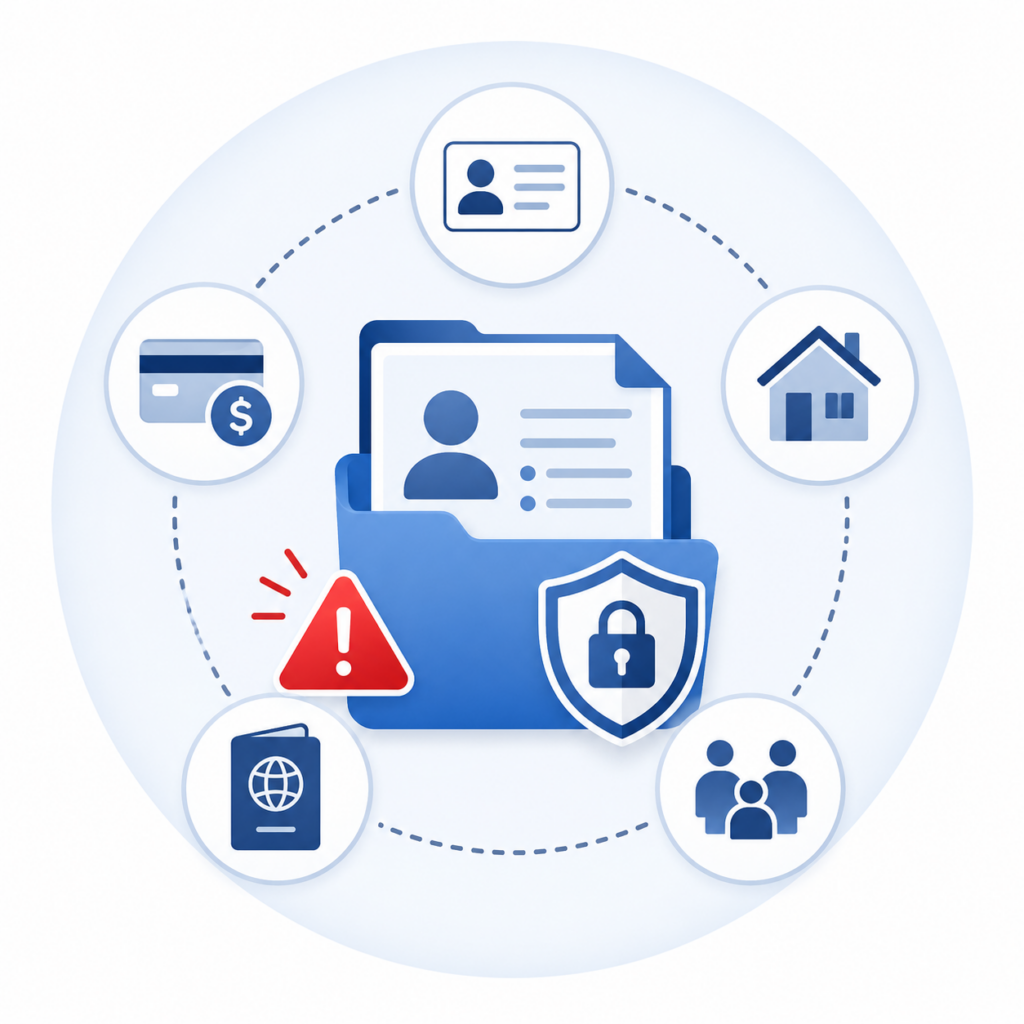
- IC number for identity verification bypass
- Home address for delivery of intercepted mail
- Bank account for account takeover attempts
- Salary information for loan application sizing
- Employer name for employment verification fraud
- Dependants’ details for social engineering targeting
- Foreign employee passport data for immigration document fraud
None of this data is exotic. It sits in the HR system as ordinary employee records. What makes it valuable on the black market is that it is complete, structured, and up to date. A leaked HR database is not a scattered leak; it is an identity kit.
Where Malaysian HR Data Actually Sits Today
The uncomfortable truth is that in many Malaysian companies, HR data is spread across environments that were never designed for the level of security the data now requires.
Employee master files often live in shared network drives, accessible to anyone with a general HR folder permission rather than a specific need-to-know basis. Salary information circulates in Excel sheets on individual HR laptops. Bank account details for payroll are held in accounting software that treats them as reference data rather than sensitive personal data. Signed appointment letters and disciplinary records are stored as PDF attachments in email folders, on personal drives, or in filing cabinets that any operations staff can access on a slow afternoon.
Each of these environments was fit for purpose when HR data was less regulated. Under the amended PDPA, and under the increasing sophistication of identity fraud in Malaysia, they now represent exactly the kind of loose custody that becomes a breach when someone in the HR team resigns, when a laptop is lost, or when a phishing email lands in the right inbox on the wrong day.
What Adequate HR Data Governance Actually Looks Like
The controls that HR data now needs are the same ones customer and financial data have had for years.
Role-based access. Not every HR staff member needs to see every field in every employee’s record. The recruitment team does not need bank details. The payroll team does not need next-of-kin. The general HR administrator does not need signed disciplinary letters from prior years. Segmenting access by role reduces the number of people any breach can start from.
Activity audit trail. A record of who added, edited, deleted, approved, or reconfigured what, and when. Not because employees are automatically suspects, but because when something goes wrong, the ability to reconstruct what actions were taken and by whom is the difference between a contained incident and a full-scale compliance failure.
Encryption at rest and in transit. Employee records should be encrypted when stored and when transmitted, so that even if a database file is copied, it cannot be read without the decryption key.
PDPA-compliant retention and disposal policy. Employee records for departed staff cannot be kept indefinitely. Retention rules under the PDPA require data to be held only as long as necessary for the stated purpose, and disposal has to be documented. The policy itself has to be defined by the organisation; the system holds the records that policy governs.
Breach notification procedure. Under the June 2025 PDPA amendments, employers appointing a Data Protection Officer and having a breach notification procedure is now mandatory. The procedure that quickly identifies what data was affected and notifies the affected parties is now a legal requirement, not a nice-to-have. This procedure is an organisational responsibility, built around the systems that hold the data, not something a system provides on its own.
Where the Platform Layer Comes In
TimeTec HR operates as a PDPA and GDPR-compliant, ISO 27001-certified cloud platform. Role-based access permissions can be configured per admin and per module, with view-only or edit-level control, so a payroll admin does not automatically have access to attendance configuration and a recruitment admin does not see disciplinary records. The system maintains an activity audit trail on all data actions such as adds, edits, deletes, configuration changes, and approvals. Data is protected through secure communication protocols in transit, with cloud infrastructure encryption at rest.
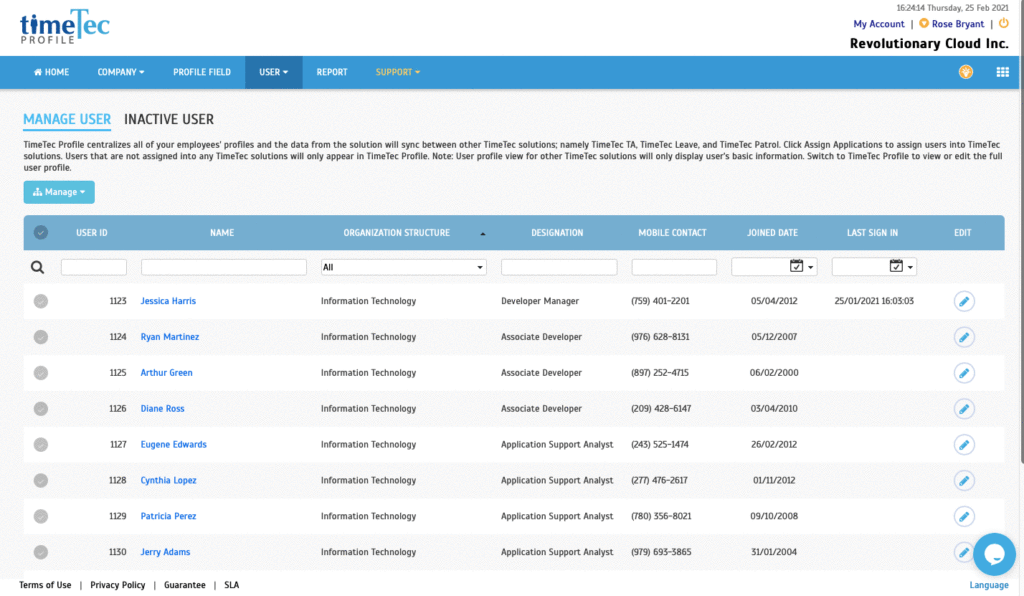
The system provides the security foundation. The surrounding governance work, defining PDPA-compliant retention and disposal policies, appointing a Data Protection Officer, and establishing breach notification procedures, remains the organisation’s responsibility. No platform performs these tasks for the company; what the platform does is give the organisation a defensible starting point to build the rest of its compliance framework around.
The difference, in a PDPA audit or a breach investigation, is between being able to show which admin roles were assigned, what actions were taken on employee records, and what technical safeguards protected the data, versus having none of that information available at all.
HR Data Is Now Regulated Data
For years, Malaysian HR data was treated as an internal operations concern. That treatment made sense when the security discipline required was modest and the regulatory attention low. Neither of those is true anymore. The PDPA amendments have moved HR data into the same regulated category as customer and financial data, and the value that same data holds on the fraud and identity markets has moved in parallel.
The company that continues holding employee master data in shared drives, Excel sheets, and email attachments is running a workflow that made sense five years ago. The regulatory environment and the threat environment have both changed. The HR data is worth more than it used to be, and the systems holding it, along with the policies wrapping those systems, have to reflect that.