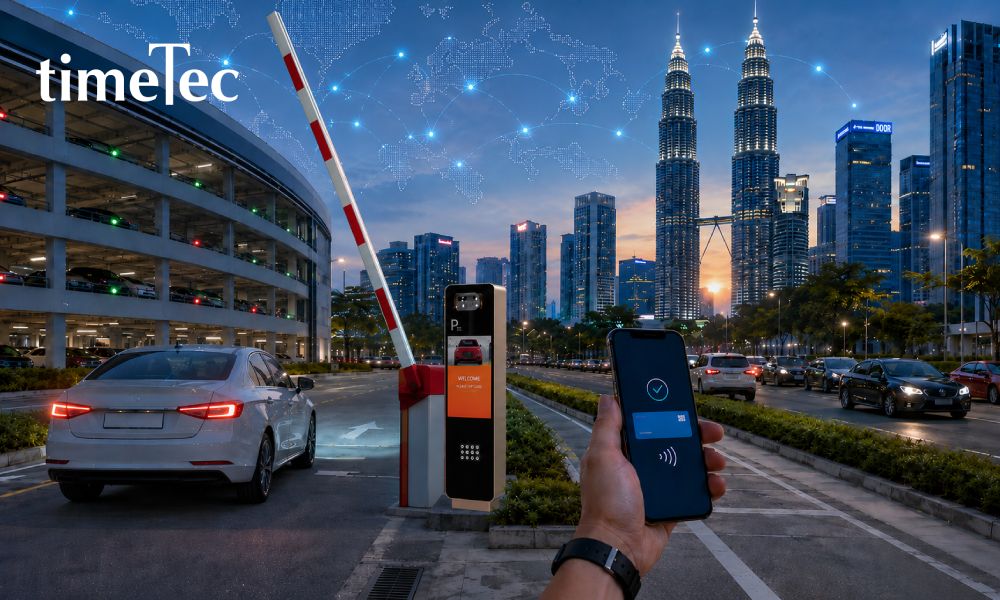
Malaysia is widely regarded as one of the more advanced smart parking markets in Southeast Asia, it’s not because it has the largest number of parking sites, but rather it has achieved a high degree of cashless adoption, private-sector innovation, and ecosystem integration. Singapore remains the regional benchmark in government-led smart mobility, while Thailand, Indonesia, Vietnam and the Philippines are still progressing at different speeds.
Here’s how I would compare them:
| Country | Overall Maturity | Key Strength | Main Limitation |
| Malaysia | ★★★★☆ | Cashless parking, LPR, private innovation | Fragmented operators |
| Singapore | ★★★★★ | National integration, Smart Nation initiatives | Small market size, less flexibility |
| Thailand | ★★★☆☆ | Shopping mall parking | Less standardized |
| Indonesia | ★★★☆☆ | Large market potential | Infrastructure inconsistency |
| Vietnam | ★★☆☆☆ | Rapid urban growth | Low smart parking penetration |
| Philippines | ★★☆☆☆ | Modern projects in Metro Manila | Traffic and infrastructure challenges |

1. Singapore – Regional Leader
Singapore is still the benchmark.
Strengths:
- Nationwide digital payment adoption
- Extensive deployment of ERP, sensors and LPR
- Strong government planning
- Parking integrated into Smart Nation initiatives
- Excellent interoperability
Weakness:
- Small domestic market
- Less opportunity for rapid commercial expansion because many systems are already mature.
Singapore focuses on urban mobility, not merely parking.
2. Malaysia – Probably the Most Commercially Advanced
Malaysia is unique because innovation is driven largely by the private sector rather than municipalities.
Malaysia has rapidly adopted:
- Ticketless parking
- LPR (ANPR)
- DuitNow QR
- Bank card payment
- eWallet Direct
- Cloud parking management
- Digital season parking
- e-Invoicing
- Integration with property management
- Integration with payment gateways
Malaysia is also one of the first ASEAN countries where many operators are moving toward:
- AI-assisted operation
- Centralized cloud monitoring
- Remote command centres
- Multi-site operation
- Payment aggregation
This is something many neighbouring countries are only beginning to adopt. Cashless payments and smart-city initiatives continue to support deployment.
Malaysia’s competitive advantage
Rather than simply automating parking, Malaysia increasingly treats parking as part of a wider digital ecosystem:
- Smart building
- Property management
- Visitor management
- Digital payments
- Finance
- E-Invoice
- Loyalty programmes
- EV charging
- Retail integration
This ecosystem approach is relatively uncommon in ASEAN.
3. Thailand
Thailand has good deployment in:
- Bangkok malls
- Airports
- Hospitals
- Commercial buildings
Technology includes:
- LPR
- QR payment
- Mobile apps
However:
- Many operators still use traditional ticket systems.
- Integration between operators remains limited.
The market is mature but fragmented.
4. Indonesia
Indonesia has enormous potential.
Advantages:
- Huge population
- Massive shopping malls
- Growing middle class
- Increasing cashless adoption
Challenges:
- Different cities develop at different speeds.
- Infrastructure quality varies.
- Parking standards differ between operators.
Many premium developments already use:
- LPR
- QRIS payments
- Mobile applications
But nationwide deployment remains inconsistent.
5. Vietnam
Vietnam is developing quickly.
Modern office towers and shopping malls increasingly deploy:
- LPR
- RFID
- Mobile payment
However:
- Many parking facilities still rely on attendants.
- Cash remains common outside major cities.
- Cloud-based centralized management is less widespread.
6. Philippines
The Philippines has adopted smart parking mainly in:
- Metro Manila
- Business districts
- Airports
- Premium developments
Challenges include:
- Heavy traffic
- Older parking infrastructure
- Fragmented operators
The market is improving but remains behind Malaysia and Singapore.
Technology Comparison
| Technology | Singapore | Malaysia | Thailand | Indonesia | Vietnam | Philippines |
| LPR | Excellent | Excellent | Good | Good | Moderate | Moderate |
| Cashless | Excellent | Excellent | Good | Good | Moderate | Moderate |
| Cloud PMS | Excellent | Excellent | Moderate | Moderate | Emerging | Emerging |
| AI | Emerging | Emerging | Limited | Limited | Very Limited | Very Limited |
| Smart Building Integration | Excellent | Excellent | Moderate | Limited | Limited | Limited |
| Payment Ecosystem | Excellent | Excellent | Good | Good | Emerging | Emerging |
Where Malaysia Is Ahead
Malaysia is arguably ahead of most ASEAN countries (except Singapore) in:
- Cashless parking adoption
- LPR deployment
- Payment gateway integration
- Multi-payment support (bank cards, QR, e-wallets)
- Cloud parking management
- Digital settlement and reconciliation
- Integration with smart buildings
- Commercial innovation
Malaysia also benefits from a competitive ecosystem of local solution providers, which has accelerated innovation beyond what is typical in government-led markets.
Where Malaysia Still Lags
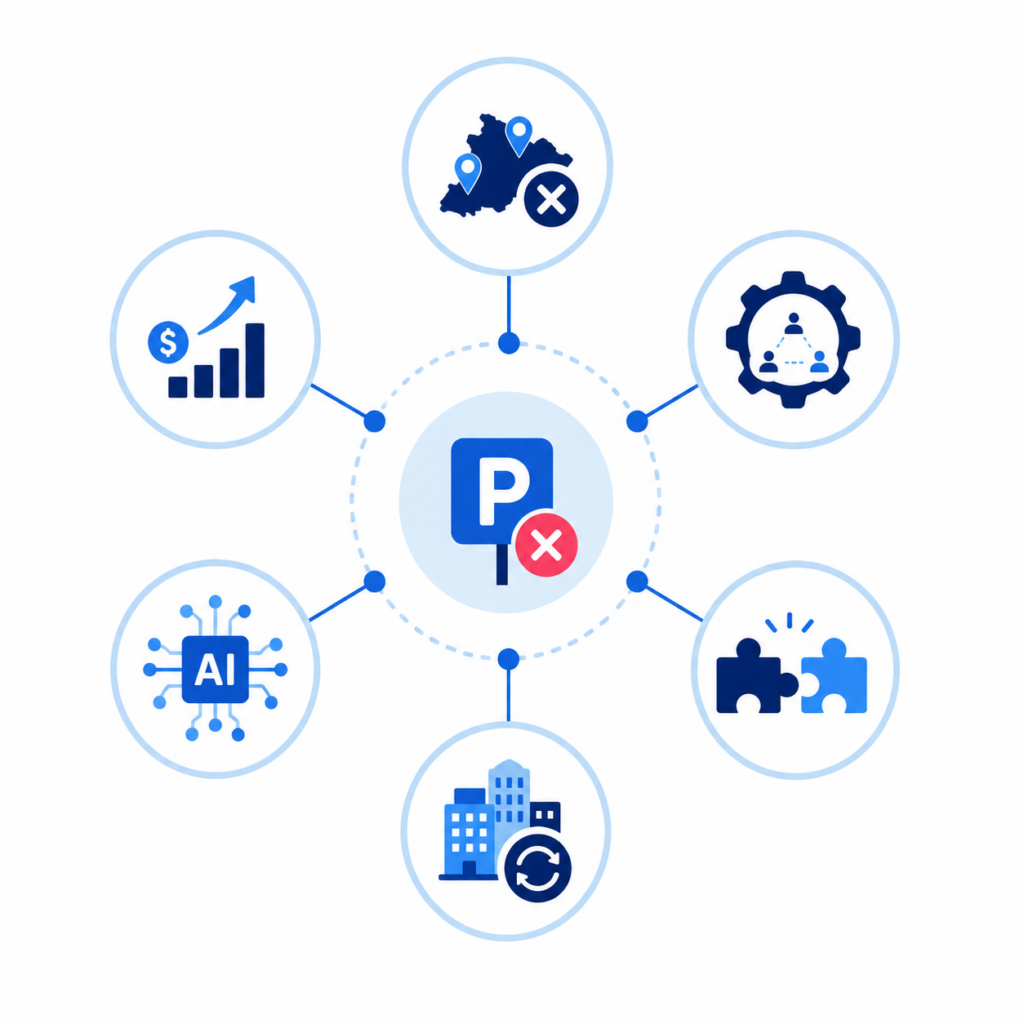
There are areas where Malaysia can improve:
- No nationwide parking platform.
- Every operator still largely runs its own ecosystem.
- Limited interoperability between operators.
- Limited sharing of real-time parking availability across cities.
- AI deployment is still at an early stage.
- Dynamic pricing based on demand is uncommon.
Looking Ahead (2026–2030)
The next phase of smart parking in Southeast Asia is likely to shift from digital parking to AI-powered urban mobility, with key trends including:
- AI agents handling customer service and operations
- Predictive occupancy and demand forecasting
- Dynamic parking pricing
- Integration with EV charging and energy management
- Vehicle-to-infrastructure communication
- Digital twins for parking operations
- Unified mobility platforms that combine parking, tolls, public transport, and payments
In that transition, Singapore is likely to remain the policy and infrastructure leader, while Malaysia is well positioned to become the region’s leading commercial innovator, particularly if local providers continue expanding cloud-based, payment-centric, and AI-enabled parking platforms across ASEAN.
03-8070 9933 | Email | www.timeteccloud.com | Interest Form