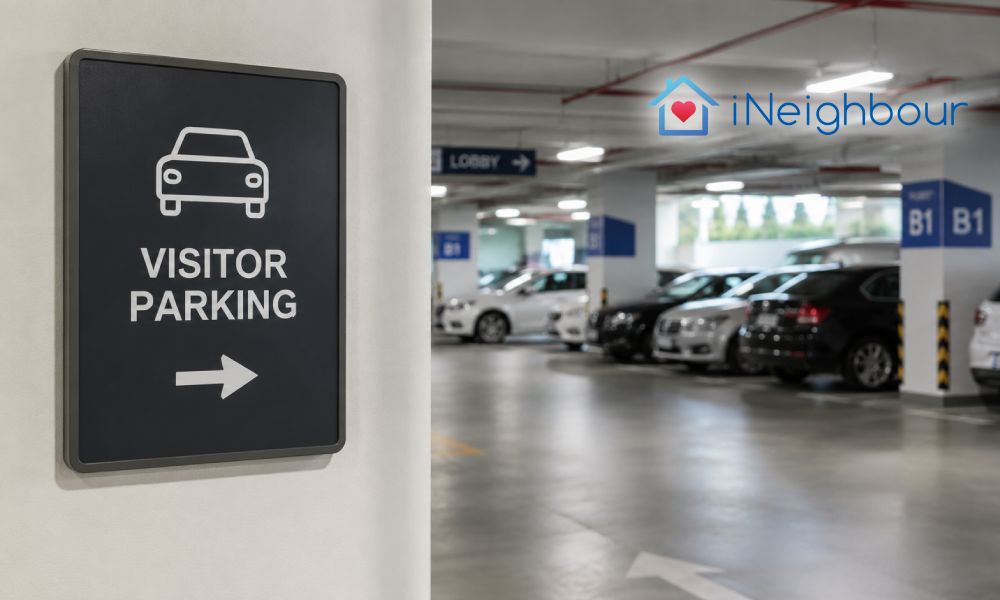
By early evening the visitor bays are full, and a guest circles the ground floor with nowhere to land. The awkward part is what’s actually parked there. A fair share of those cars don’t belong to visitors at all — they belong to residents who parked downstairs because it was quicker than heading to their own lot. Visitor parking was set aside for guests, and it’s quietly being used as overflow by the very community it serves.
One resident doing it now and then is nothing. A handful doing it every evening is a shortage.
Why Your Visitor Parking Fills With Resident Cars
The behaviour is easy to understand. A resident is popping out again in an hour, or carrying groceries up, or simply finds the visitor bays closer to the lift. Parking there for convenience feels harmless in the moment. The problem is that it scales badly — what one owner treats as a one-off, several treat as routine, and the bays meant to rotate guests through the day stay occupied by cars that already have a home in the development.
Management offices know it happens and struggle to do much about it. The bays are communal and unmarked by owner. A guard glancing at the row can’t tell which car belongs to a resident and which to a genuine visitor — they all look the same. Challenging an owner over a parking spot creates friction nobody wants, so the practice gets tolerated, and tolerance is what turns an occasional shortcut into a standing habit. Notices go up asking residents to use their own bays, and notices get ignored.
You Can’t Stop What You Can’t Tell Apart
Every attempt to manage this by hand runs into the same wall: identity. Enforcement depends on distinguishing a resident’s car from a visitor’s, and a communal bay gives you no way to make that distinction. Without knowing which plate belongs to which unit, “resident parked in a visitor bay” and “legitimate guest” are indistinguishable — so there is nothing to enforce against, only a suspicion.
That is why signage and reminders don’t hold. They ask for cooperation without changing what’s actually possible. The behaviour only stops when the system can tell, at the point of entry, whether a car is a resident or a visitor — and act on the difference automatically, without a guard having to judge it.
How iNeighbour Closes the Gap
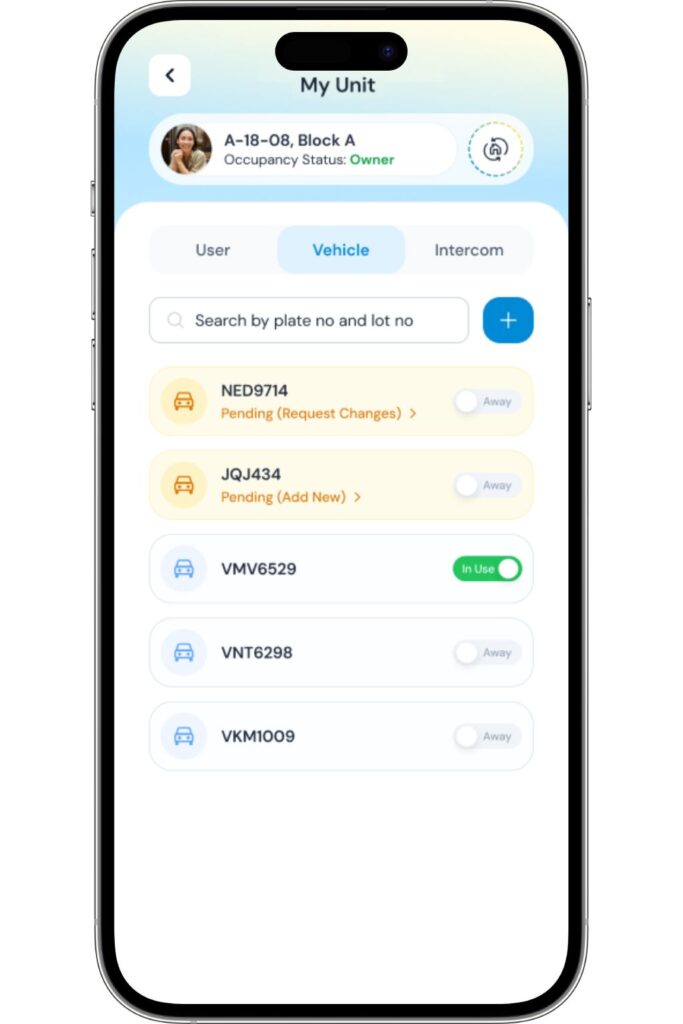
This is where identity does the work that enforcement can’t. In iNeighbour, a resident registers their vehicle under their unit — plate tied to the unit record, recognized by LPR at the gate. Once that plate is on file as a resident vehicle, it can’t turn around and register itself as a visitor. The convenience route simply closes: a car already known to belong to a unit cannot claim a visitor pass or a visitor bay, because the system already knows whose it is.
That removes the awkward part entirely. No guard has to identify the owner, no committee has to confront anyone, and no notice has to be issued. The rule isn’t enforced after the fact — it’s built into who can register as a visitor in the first place. Genuine guests still register and park as normal; residents are quietly kept in their own allocation because their plate says who they are.
It also complements the fairer-use argument we made in From Free Parking to Fair Charging: that piece was about rotating genuine visitors through limited bays sustainably. This is the other half — making sure the bays being rotated are actually holding visitors, not residents using them as a shortcut.
| Communal, manual visitor parking | Identity-based with LPR |
|---|---|
| Guard can’t tell a resident’s car from a guest’s | Every resident plate is registered to a unit |
| Enforcement relies on confrontation and notices | A resident plate can’t register as a visitor at all |
| One-off convenience normalizes into routine | The shortcut is closed at the point of registration |
| Bays meant for guests fill with resident overflow | Visitor bays stay available for actual visitors |
A notice asks residents to leave the visitor bays for guests. A system makes sure they can’t take them in the first place.
If your visitor parking keeps filling with cars that already have a home in the development, the fix isn’t a sterner notice — it’s identity at the gate. Request a demo of iNeighbour to see LPR and unit-level vehicle registration keep visitor bays for visitors.