
This is what a typical bank statement looks like for most Malaysian properties every month:
| Date | Description | Amount | Reference |
| 18/03/2026 | Transfer | RM250.00 | – |
| 19/03/2026 | Transfer | RM750.00 | MAINTENANCE |
| 19/03/2026 | Transfer | RM250.00 | 12-15 |
| 20/03/2026 | Transfer | RM250.00 | UNIT 08-22 |
RM250 with no reference — a dozen units owe that exact amount. RM750 labelled “MAINTENANCE” — one unit paying three months, or three units paying through one family account? The money is in the account. But no one knows who sent what.
This scene is familiar to anyone who’s managed a building’s finances — whether you’re the admin, the treasurer, or a committee member. And what comes next is where the real cost begins.
The Cost You Don’t See
The obvious part of payment collection is the money coming in. The hidden part is everything it takes to figure out where that money belongs.
In most buildings, the majority of residents pay on time with proper references. That part’s fine — no work needed.
But the rest? Each one triggers a chain of manual work: checking bank statements, cross-referencing WhatsApp messages, calling or texting residents to confirm, matching against the outstanding list, updating the spreadsheet, and issuing a receipt.

Depending on the size of your building, this can easily add up to 20, 40, even 60 hours a month — spent entirely on figuring out who already paid.
That’s hours not spent resolving complaints, coordinating contractors, inspecting facilities, or preparing for the AGM. The cost isn’t in the payment itself. It’s in the time that disappears around it — time that could have gone to work that actually moves the building forward.
For volunteer committees in landed communities and taman associations, the cost shows up differently. There’s no paid admin, so the treasurer typically handles all of this after work and on weekends — matching transfers in Excel, issuing receipts, updating shared Google Sheets so other committee members can see who’s paid and who hasn’t.
It’s a lot of repetitive work for someone who’s doing it on top of their day job, and it takes time away from the improvements they actually wanted to focus on when they joined the committee.
How iNeighbour V1 Helps
When we introduced eBilling in iNeighbour V1, the shift was immediate for buildings that adopted it.
Residents could see their invoices in the app. They could pay directly — FPX, card, or e-wallet — through their own unit account. The system knew exactly which unit paid, which invoice, and when. Receipts were auto-generated. Balances updated instantly.
The detective work disappeared. No more matching anonymous bank transfers. No more chasing residents on WhatsApp to ask, “Was that your payment?” No more manual spreadsheet updates.
Before: Bank statement → manual matching → WhatsApp confirmation → spreadsheet update → receipt issued. Per unit, every month.
After: Resident pays in app → auto-matched, auto-posted, auto-receipted. Done.
All those hours of monthly reconciliation — effectively eliminated. Admin teams got that time back for actual property management. Volunteer treasurers got their weekends back.
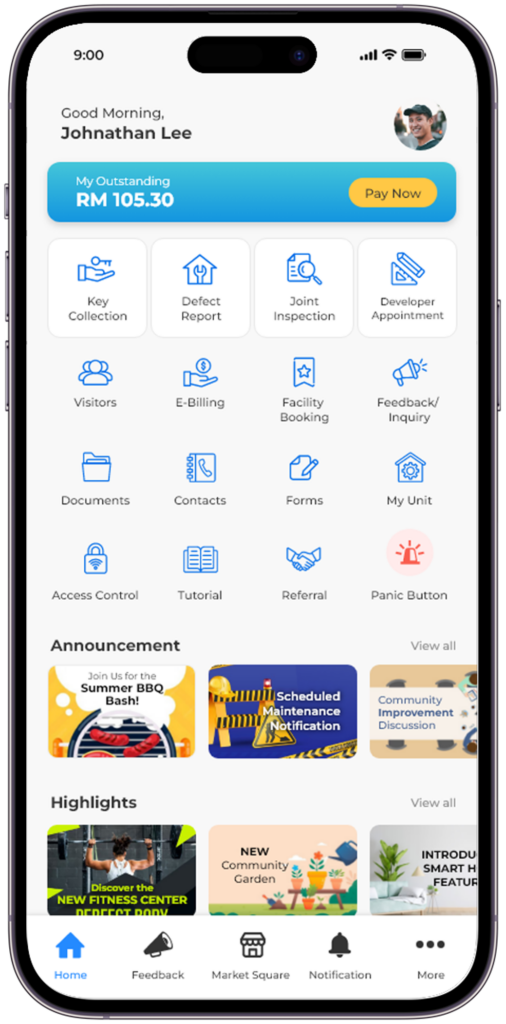
That was already a significant step. But the hidden costs didn’t stop at maintenance fee collection.
What V2 Now Solves
Buildings don’t just collect maintenance fees. They collect facility deposits, event fees, booking charges — and handle refunds when things are returned or cancelled. In V1, these still required manual tracking. In iNeighbour V2 and iSpace, they don’t.
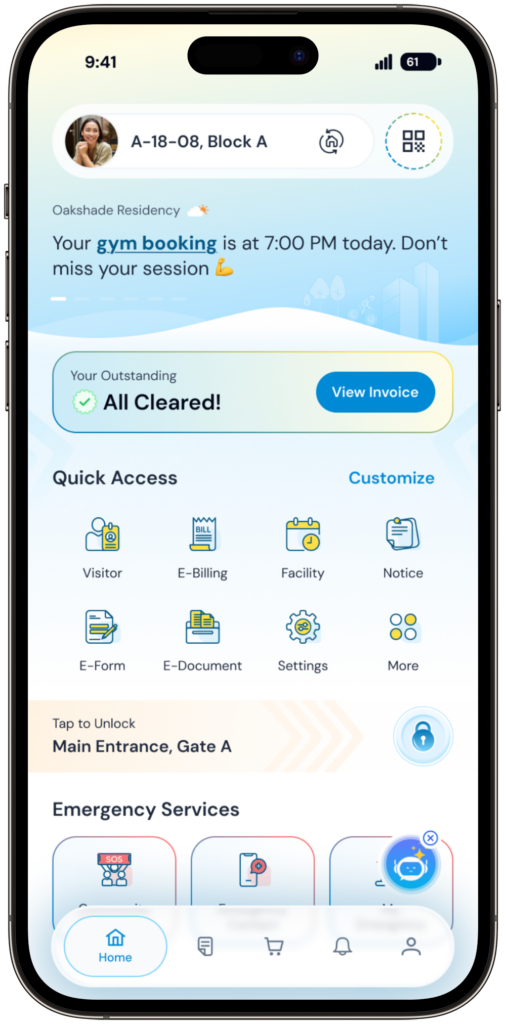
Facility deposits and booking fees, collected automatically. When a resident books the function hall or BBQ area, the deposit or booking fee is part of the transaction. No more separate bank transfers, no more tracking who paid and who didn’t.
Event participation fees, handled in the same flow. When the management organises a community event, residents can register and pay the fee directly through the app. No more collecting cash at the door or chasing transfers after the fact.
Refund records, properly tracked. When a deposit is returned, the admin updates it in the system — and the resident is notified automatically that their refund is ready for collection or has been credited to their balance. Every refund is recorded with a full audit trail, so the committee can see exactly what was collected, what was returned, and why. No more handwritten notes or informal WhatsApp confirmations.
Auto-debit for recurring fees. For residents who opt in, recurring charges like maintenance fees are debited automatically each month. They don’t forget. You don’t chase. This alone can dramatically reduce the number of late payments every cycle.
Each of these was a separate manual process before — a separate hidden cost. iNeighbour V2 brings them all into one system.
Why Integration Changes Everything
What sets iNeighbour V2 apart isn’t just individual features — it’s how everything connects into one system.
Every transaction — maintenance fees, facility deposits, event charges, refunds — is tied to a unit, an owner, a history. Not scattered across bank statements, spreadsheets, and WhatsApp threads. One platform, one record, one source of truth.
The committee dashboard shows real-time collection status. Not an estimate. Not a month-end approximation. Actual numbers, updated the moment a payment is made — outstanding balances accurate to the minute, defaulter status visible at a glance, and historical trends across months and quarters.
Committee meetings go from “how much do we think we’ve collected?” to “here’s exactly where we stand.” Data replaces guesswork. Decisions get faster.
That’s the difference between digitising individual processes and building a connected system — when everything is linked, the manual work between them disappears too.
The Bottom Line
The cost of manual payment collection was never really about the payment. It was about the hours of matching, chasing, and reconciling that surrounded every transaction — hours that most buildings accepted as normal because there was no alternative.
iNeighbour V1 eliminated the bulk of that work for maintenance fee collection. V2 extends it to deposits, event & booking fees, refunds, and recurring payments — closing the gaps where manual work was still hiding.
We’re building this for the long run. Every release removes another layer of hidden cost — because the goal isn’t just to solve today’s problem, but to make sure the next one is already covered.
Want to see how eBilling works in iNeighbour V2? Book a walkthrough and we’ll show you the full flow — from resident payment to committee dashboard.
This is part of the series “The Cost of Just 5 Minutes.” Follow along as we uncover the hidden time costs in everyday property operations — and what it looks like when they disappear.